Somebody standing in a driveway off Liberty Pike or out near Berry Farms eventually asks the same thing: does this door need oil, or does oiling the wrong part make it worse? Franklin's clay soil and shallow limestone shift foundations slightly over the years, and a door that has gone slightly out of square often gets noisier before anyone notices the frame moved. Lubrication will not fix that shift, but it will tell you a lot about what kind of noise you are actually hearing.
What Clay Soil Does to Tracks
Homes in Downtown Franklin sit on shallow bedrock and thin soil, and the ground shifts a little more than people expect over a hot Middle Tennessee summer. That movement can tilt a track just enough to make rollers ride against one edge instead of rolling straight. Grease will quiet that contact for a while, but it is treating a symptom. If one side of the door sounds worse than the other, note it before you lubricate, since that detail matters if the noise comes back in a month.
Rollers Carry the Daily Wear
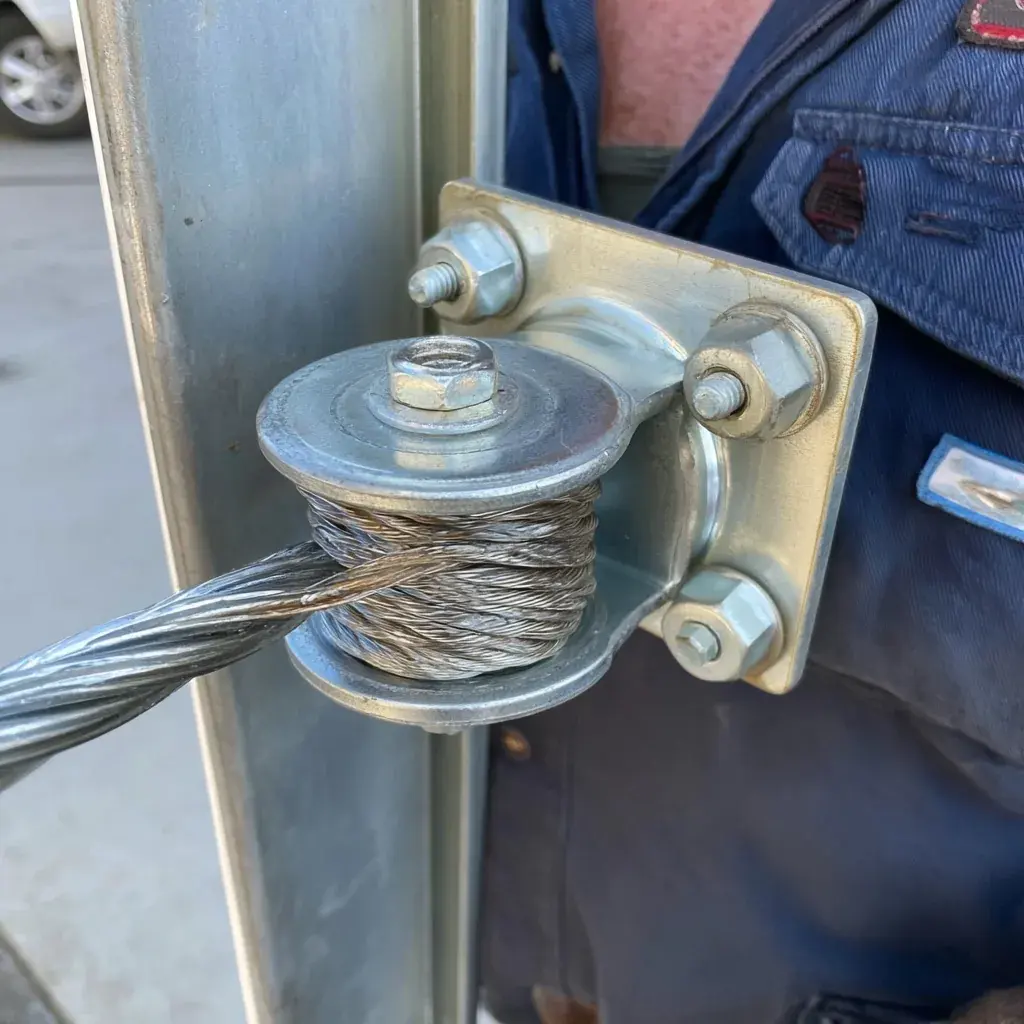
Rollers in a Franklin garage take thousands of trips a year, and the bearing inside each wheel wears faster than the wheel itself. Homes near Westhaven and McKay's Mill run their doors daily, and dry bearings start to squeal months before anyone notices the roller wobbling in the track. A few drops of lithium grease on each stem, worked in by hand, keeps that bearing turning smoothly instead of grinding against dust that settles in from a Franklin driveway.
Hinges Flex With Every Cycle
A sectional door bends at every hinge point each time it opens, and those joints near Berry Farms or Fieldstone Farms take the same flex thousands of times a year. Metal fatigue shows up first as a faint creak, then as a visible gap where the hinge no longer sits flush against the panel. Lithium grease worked into that joint slows the wear, but a hinge that has already cracked needs the licensed pros we connect you with, not more grease.
Bearings Wear Out Silently
The bearings at the center of the shaft and inside the opener rarely give warning before they start grinding. Old grease dries out and turns gritty long before it looks empty, so a bearing can run dry while still looking greased from the outside. A light lithium application every few months keeps the shaft turning freely. If a center bearing still grinds after fresh grease, the bearing itself is likely worn, not the lubricant.
Springs Need Light, Not Heavy, Grease
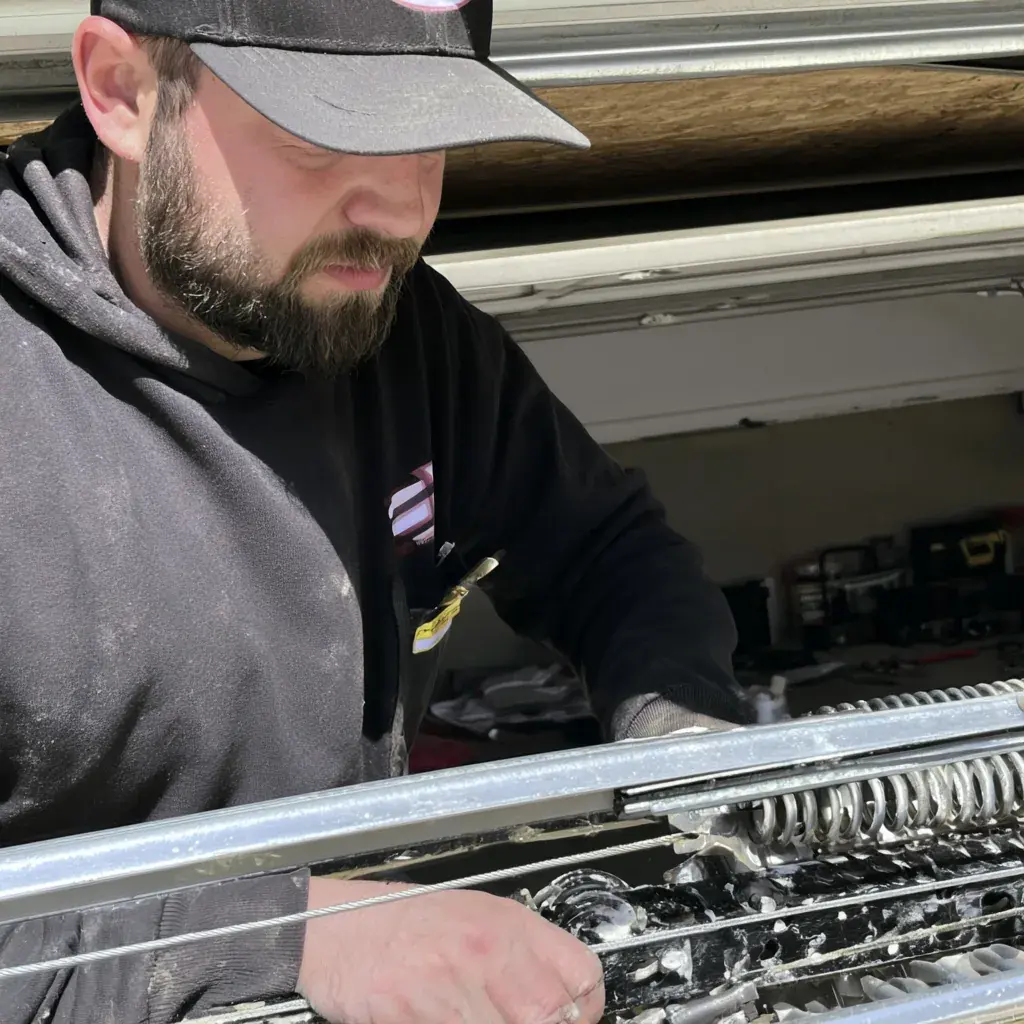
Most garage doors around Franklin and Cool Springs use torsion springs mounted above the opening, coiled tight and turning as the door travels. These springs benefit from a light lithium grease worked across the coils, not a heavy packing that cakes between them. Too much grease traps dust from the garage floor and turns into a gritty film that grinds instead of gliding. A thin, even coat does more than a thick one ever will.
Why the Opener Rail Stays Dry
The horizontal rail leading to the opener near Cool Springs or Grassland should stay bare metal, no grease, no spray. That rail carries the drive chain or belt, and any lubricant on it collects dust and grit that grinds against the moving parts instead of protecting them. Franklin garages see enough dust from nearby construction and seasonal pollen that a greasy rail turns into a gritty one within weeks. A dry cloth wipe is the only maintenance that rail needs.
Where Silicone Spray Does Better
Tracks and weatherstripping respond better to silicone spray than grease. The vertical tracks near Sullivan Farms or Stream Valley guide the rollers without touching the bearing directly, so a light silicone coat keeps them slick without attracting debris. The rubber seal along the bottom of the door also benefits from silicone, since it keeps the rubber flexible through a Franklin summer without the tackiness grease leaves behind on a surface that already meets the driveway.
Thick Grease Becomes Grinding Paste
Skip any grease sold as general purpose or marked heavy-duty. That thick formula grabs dust and pollen straight out of the air near Franklin Road or Carothers Parkway, and within a season it turns into a gray paste packed into the bearing instead of lubricating it. Once that paste hardens, the roller drags instead of rolls, and cleaning it out takes more effort than the original lubrication ever would have.
How Often a Franklin Door Needs It
A door used daily in a new-build subdivision near Westhaven or Fieldstone Farms typically needs lubrication a few times a year, more if the garage floor tracks in dust or lawn debris. Homes near Carters Creek or the Harpeth River that see more humidity may notice grease drying out faster in a hot, damp summer. Wiping the track and hinges clean before reapplying grease matters as much as the grease itself, since old grit left underneath keeps grinding no matter what gets added on top.
What Cold Mornings Reveal
A cold snap in Williamson County stiffens grease that has gone dry or gummy, and that is exactly the wrong moment for a spring that was already working harder than it should. Homes near the Harpeth River greenway trails see extra dust and moisture swings that speed this up. Ten minutes with a rag and fresh lithium grease before the first hard freeze is cheaper than an emergency call after one.
Wrong Grease, Louder Door
Grease on a hinge pin worn oval, or a bearing already grinding, only quiets the noise for a day or two. If a door still sags at the bottom, jerks partway through its travel, or drifts open on its own near Franklin Road, the springs or the track alignment need a look, not another squirt of oil.
Dealing with this in your home?
Franklin's clay soil swells after storms rolling through Cool Springs and settles again once things dry out near the Harpeth River, and a garage door track anchored to a slab or crawl space foundation shifts right along with it. Homeowners near McKay's Mill or off Del Rio Pike often notice the door binding on one side first, right when the ground moves.