What To Expect When You Book in Franklin, TN
How a Franklin visit runs, from arrival to the final safety check.
Expect a scheduled arrival window, the opener unhooked so the door moves under hand power alone, a walkthrough of what has failed and why, and a signed estimate before any repair starts on your Williamson County home.
The Four Stages
What To Expect walks through a Franklin repair visit from arrival to the last test of the day, so nothing that happens once the pro is at the door catches a homeowner off guard. An arrival window is given rather than a fixed time, since a stuck torsion spring in a Westhaven garage can take longer than a loose track bracket in Berry Farms. The visit follows the same order every time: disconnect, inspect by hand, explain, quote, then fix.
With the opener disconnected, the pro raises and lowers the door by hand through its full range, feeling for the weight it should carry versus the weight it does carry. That gap points to the failing part faster than watching the motor run, since a strained opener can mask a bad spring for months in a Franklin garage before the motor itself gives out.
- The opener gets unplugged and the trolley released from the arm before anything else, so the door's actual weight can be judged by hand rather than guessed at through a motor that may already be straining.
- The door is walked up and down its full track by hand, with the pro watching for the exact spot where it sticks, leans, or drops, rather than just listening for noise.
- Springs get checked for the kind of fatigue that shows up as uneven lift rather than an obvious break, since a spring can lose tension gradually in a Franklin garage without ever snapping outright.
- In Franklin, the frame gets checked for square before anything else. Homes near Westhaven or on older lots downtown can settle enough that a track looks worn when the real issue is a frame pulled slightly out of alignment.
What a Fair Written Quote Contains
Once the door has been walked through its travel, the pro explains out loud what is wrong before anything gets written on paper. That means naming the actual part, whether a cable, a hinge, or a spring, and pointing to it on the door so the homeowner sees what is being described. A Franklin homeowner should hear this explanation before any number is mentioned, not after.
- The name of the part that failed and its role in the door, stated plainly rather than described in general terms like a worn spring.
- A plain reason for why it failed now, tied to its age or use rather than left as an unexplained coincidence.
- What happens to the door if it keeps being used in its current state, described in concrete terms rather than a general caution.
- The torsion spring going in gets its wire gauge written down as a measured number, not described as close to what came off. That single figure is what lets a Franklin homeowner compare one written quote against another.
- A line separating what the part itself costs from what the hours of labor cost, shown as two figures rather than one total.
- The written estimate states whether the opener itself has been straining against a bad spring or cable, or whether the problem stops at the door hardware. Skipping that line is how a second visit gets scheduled later.
If Something Is Not Right
Once the estimate is signed, the pro works from that document and nothing else. If a second issue turns up mid-repair, such as a bracket bent from years of use, the pro stops and explains it before touching it, rather than adding the charge afterward. A written estimate is the record both sides agreed to, and it stays that way through the visit.
When the repair itself is finished, the pro runs the same two safety checks required on every residential opener: the photo eye sensors near the floor of each track, and a force reversal test that sends the door into an obstruction to confirm it backs off instead of pressing down. Both get checked again after the repair, not just before it, since a fix to one part can change how the whole door balances.
- If the hand-lift check finds a spring, cable, or roller worn past safe use, the written estimate names that part and explains why it failed before any work starts. A homeowner in Westhaven or off Del Rio Pike can ask questions or decline that line item before the pro touches it.
- An auto-reverse test, confirming the door backs off a hand or a box left in its path rather than pressing down, is checked on every visit, whether the home sits in Cool Springs or off Lewisburg Avenue.
- If the door itself needs replacing rather than repairing, that job usually waits for a separate visit once the new door arrives, since a Franklin garage rarely keeps a spare panel set on hand. The pro will say so plainly rather than start work he can't finish that day.
The Visit, Step By Step
- Arrival comes as a window, not a fixed hour, since a spring replacement near Cool Springs can take longer than a simpler call closer to downtown Franklin.
- Releasing the opener matters because a motor can mask a weak spring or a frayed cable by muscling a door that would otherwise sag or bind. With the drive gear freed, gravity and hand pressure across a Franklin driveway show the tech exactly where the resistance really is.
- The failed part gets named and explained before any tool touches the door, so the diagnosis is something you can follow, not just a verdict handed down.
- A written estimate comes next, listing the parts, the spring size and cycle rating, and labor, before anything is ordered, opened, or replaced.
- Work starts only once that estimate is approved, the same routine for a McKay's Mill townhome or an older place near Franklin Battlefield.
- Every visit in Franklin ends the same way: opener reversing force tested, an auto-reverse check against an obstruction, and both photo eyes checked across the opening.
Frequently Asked Questions
How long does a garage door repair visit usually take?
Most single-repair visits in Franklin run under two hours, from the opener disconnect through the final safety tests. A torsion spring or cable job tends to sit at the shorter end once the part is confirmed, while a full panel section or track replacement can run longer, especially on an older Old Town home where the frame needs squaring first.
What does the written estimate actually include?
It should list the specific part going in, such as spring wire gauge or cable diameter, priced apart from labor, so you can see what you are paying for each. It should also state what happens if the hand-lift check finds something beyond the original complaint, so nothing gets added to the bill without your sign-off first.
What if I think the estimate is wrong?
Ask the pro to show you the worn part next to where it sat, since a fatigued spring or frayed cable is usually visible once pointed out. If the explanation still does not match what you are feeling in the door, you can decline the work on the spot. Nothing on the estimate is final until you sign it.
Will you test the door before you leave?
Raise it with the pro before they leave the driveway, while the door and the paperwork are both still in front of you. Compare the written estimate line by line against the itemized invoice, since any real difference between the two should be explainable on the spot, not something to sort out later over the phone.
Ready to get a visit scheduled?
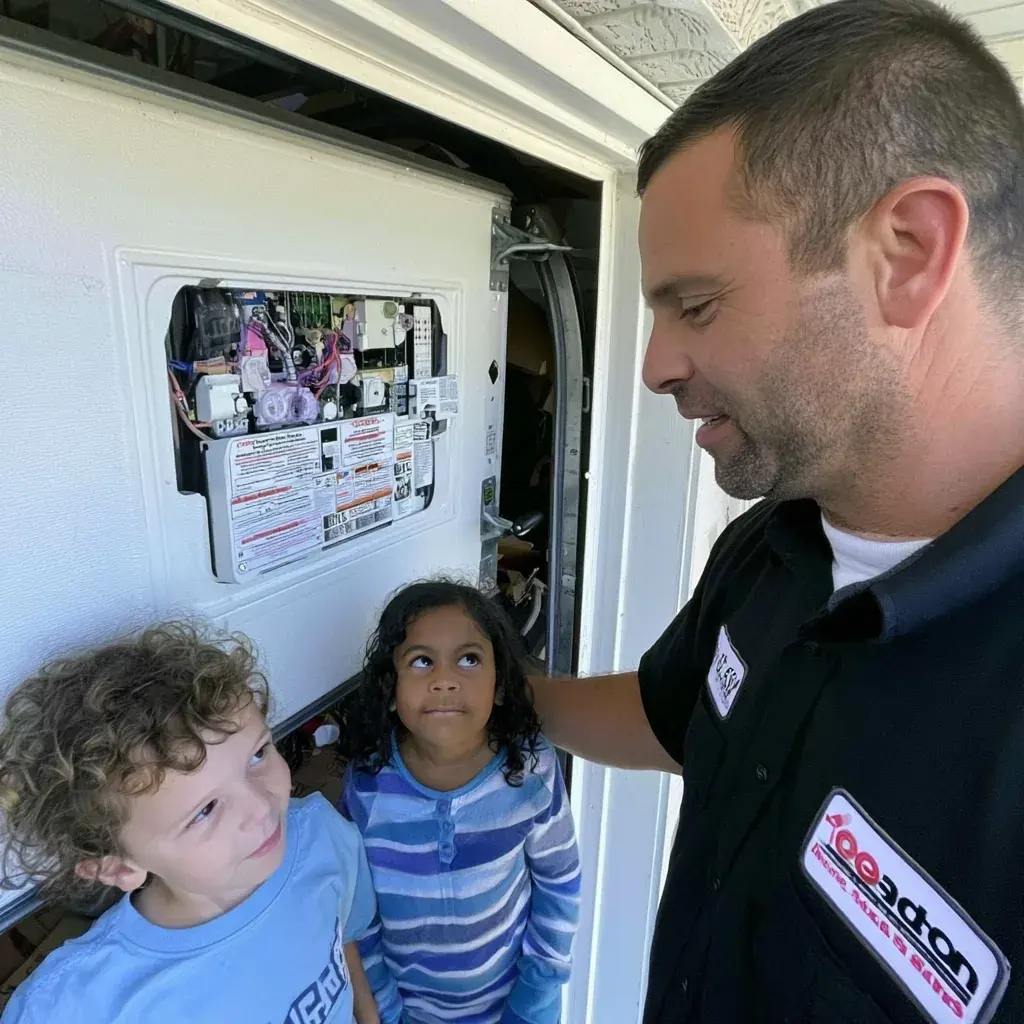
This is what a visit from the licensed pros we connect you with looks like anywhere from Downtown Franklin to Cool Springs.
Call (615) 759-0548