Older Homes Carry Different Door Trouble
A garage door that will not open in Franklin usually points to a snapped torsion spring above the door, the most common and most dangerous cause since that spring holds real tension. Homes near Cool Springs and Berry Farms often notice it after a loud bang, then the door refuses to lift at all.
Newer subdivisions off Carothers Parkway and Liberty Pike carry heavier insulated steel doors on slab foundations, and the torsion springs sized for that added weight store more energy, so a snap there tends to be sudden and loud rather than gradual.
A garage door that will not latch often means the frame has shifted, not the hardware. Clay soil under a slab expands and contracts with moisture, and that movement can twist a frame just enough to throw the lock bar out of line. Squaring the track before replacing parts saves a second visit.
When a Repair Turns Into a Replacement Decision
- Cause
- Torsion springs are built for a fixed number of lift cycles; Franklin's humid summers and periodic cold snaps can shorten that lifespan unevenly between homes.
- Danger
- Torsion springs typically hold up for years of daily cycles before the steel fatigues, often giving out without warning on a cold morning.
- First check
- Left alone, a slipped cable can let a full section drop suddenly, and a door binding against a bent track only forces that rail further out of shape.
- Timeline
- A snapped spring or a jumped cable can sit unnoticed for days in a garage nobody enters, until the door will not lift at all.
- Response
- In Williamson County, most spring replacements under $25,000 need no state contractor license, though a business should still confirm any City of Franklin local requirement.
- Availability
- Franklin's cold snaps in January stiffen grease and make aging spring steel more likely to snap on the coldest mornings, but the bigger driver here is cycle count. A door used daily near Berry Farms or Westhaven wears out its spring on schedule, cold weather or not.
- Turnaround
- an estimated $189–$559
Storm Season and the Panels Facing It
People lump a stuck-shut door in with one that reverses mid-close, but the two point opposite directions. A door that never leaves the closed position sits upstream of the opener, in the spring, cable, or gear train, while a reversing door has already been moving and is a sensor or travel-limit problem near the bottom of the track. Watch where the door sat when trouble began. If it stayed shut while the opener hums or strains, the fault is a spring, cable, or gear problem upstream of the motor, not a sensor or reversal issue tied to closing.
Getting Someone Out the Same Day
Once a Franklin homeowner near Sullivan Farms or Westhaven calls about a door frozen shut, the licensed pros we connect you with look first at the shaft above the opening for a broken torsion spring, then check the cables at the drums, the opener, and the track before touching anything else.
A cable that jumps its drum lets one side of the panel keep climbing while the other stalls, leaving the door sitting crooked in the opening. Left that way, the section can twist further and the remaining cable can give out under the strain.
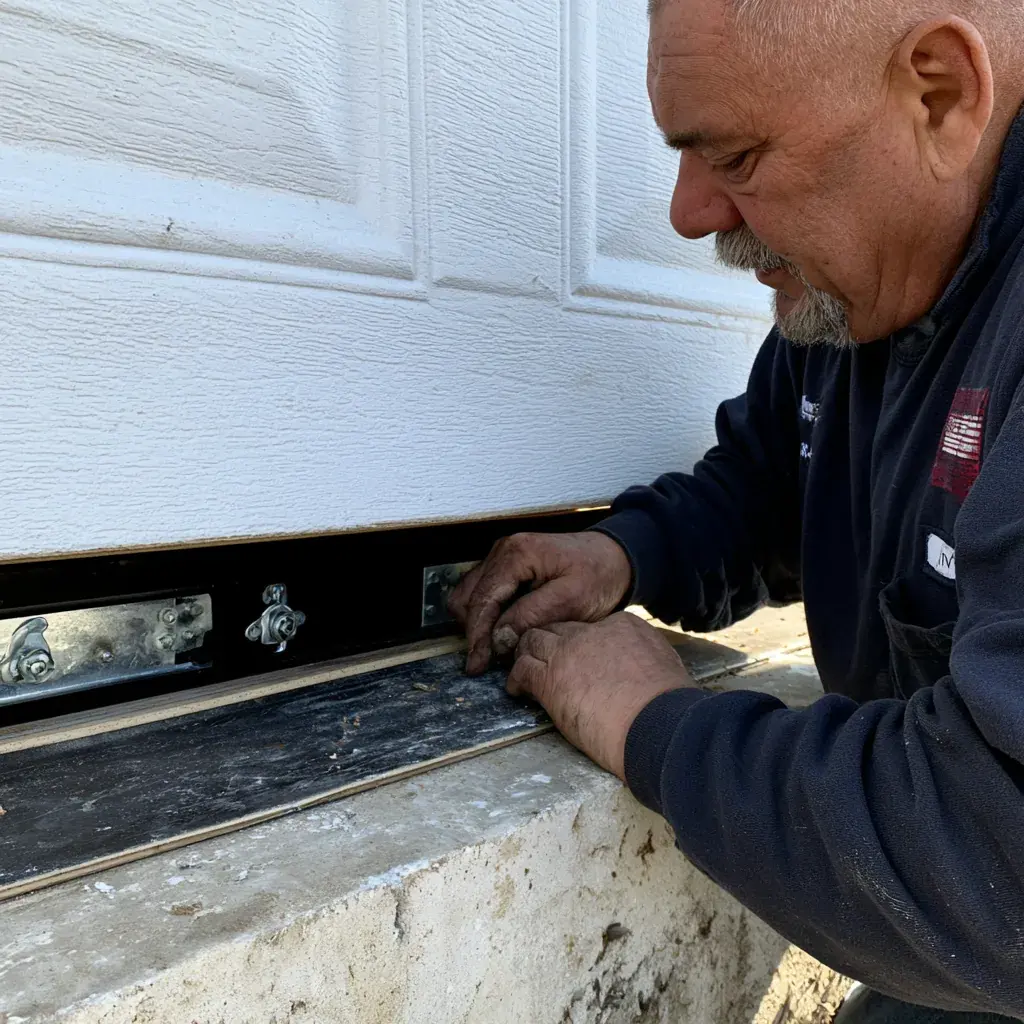
Heavy rain swells wood trim and pushes water toward the lowest point of a garage door, which is exactly where seals and bottom panels live. A door that stuck shut after a storm, or let water past the threshold, usually needs more than a quick wipe-down to dry out right.
GARAGE USE TYPE AND WHICH DOOR STYLE FITS IT
| Likely Cause |
Why It Happens Here |
|---|
| Homes that sit on a slope or near a creek settle a little every year, and a garage door frame does not forgive that the way a doorway inside the house does. Once the frame goes out of square, rollers bind, cables wear unevenly, and the opener starts working harder than it should. | Garage doors rarely fail without warning. Most give small signs first: a louder motor, a slower lift, a track that looks slightly off-line. Catching that early, before a spring or panel gives out completely, is usually the difference between a quick adjustment and a same-day repair bill that runs much higher. |
| Openers rarely fail out of nowhere. A cold snap stiffens grease, a spring loses a little tension, and the motor starts working harder each time without saying so. By the time it grinds or stalls, it has been asking for help for weeks. | Water finds the bottom of a garage door before it finds anywhere else, and once a panel or seal has soaked through, it rarely dries out the way the rest of the door does. What looks like a cosmetic problem at first can end up affecting the sensors and the opener underneath it. |
| A garage door that binds only at certain points in its travel is often chasing a frame that has shifted slightly out of square, not a broken part. Forcing the opener through that resistance repeatedly is what turns a simple adjustment into a cable or spring failure. | Pop-up thunderstorms in spring and summer bring hail and gusty wind that can dent panels or knock an opener's alignment off. A door that took a hit like that may still look fine while a sensor or seal underneath has already failed. |
Knowing When To Stop And Call
Don't touch the spring or try to force the door up. Coiled steel under that much load can whip a bar out of your hand or drop a section on you. Pull the emergency release only if the door is already down and you need it shut, not to force it open.
Reading a Cold Snap Before It Hits Springs
A stuck door in Franklin should be assumed to be spring-related first, opener second. Left alone, an opener straining against a dead spring will burn out its gears or strip the drive within weeks, turning one repair into two.
Not sure it's worth fixing? Ask first.
Treating garage door will not open usually runs an estimated $189 to $559. That is a budgeting figure, not a price. These figures cover the working parts and the labor to fit them: springs, cables, rollers, hinges, bottom seal, opener components, panel repair. Anything structural is looked at separately before a number means much, whether that is a jamb gone soft where it meets the slab or a settled header on one of the older houses near the downtown square. Ask what the visit charge is, and get the scope in writing. Full bands and what moves them are on the pricing guide, and the service that handles this is Broken Spring Replacement.