A squeal or screech when your garage door moves is usually friction somewhere it shouldn't be. Rollers, hinges, and springs all rub against metal every time the door runs, and once factory grease dries out, that motion turns into noise. In Franklin homes, especially older ones near downtown Franklin with more years of use on the same hardware, this sound tends to show up gradually until it's loud enough to notice from the driveway. It's rarely the door failing outright. It's usually just parts asking for attention.
Where The Sound Starts
Start by watching the door through a full open-and-close cycle. If the screech tracks with the rollers moving through the track, that points to dry or worn rollers. If it happens right as the door starts lifting, that often points to the springs instead. Listen for whether the sound comes from one side or both, since Franklin garages with uneven settling, common on older lots around Franklin, sometimes wear one track faster than the other. Narrowing down where the noise starts saves time before anyone touches a wrench.
Dry Rollers And Hinges
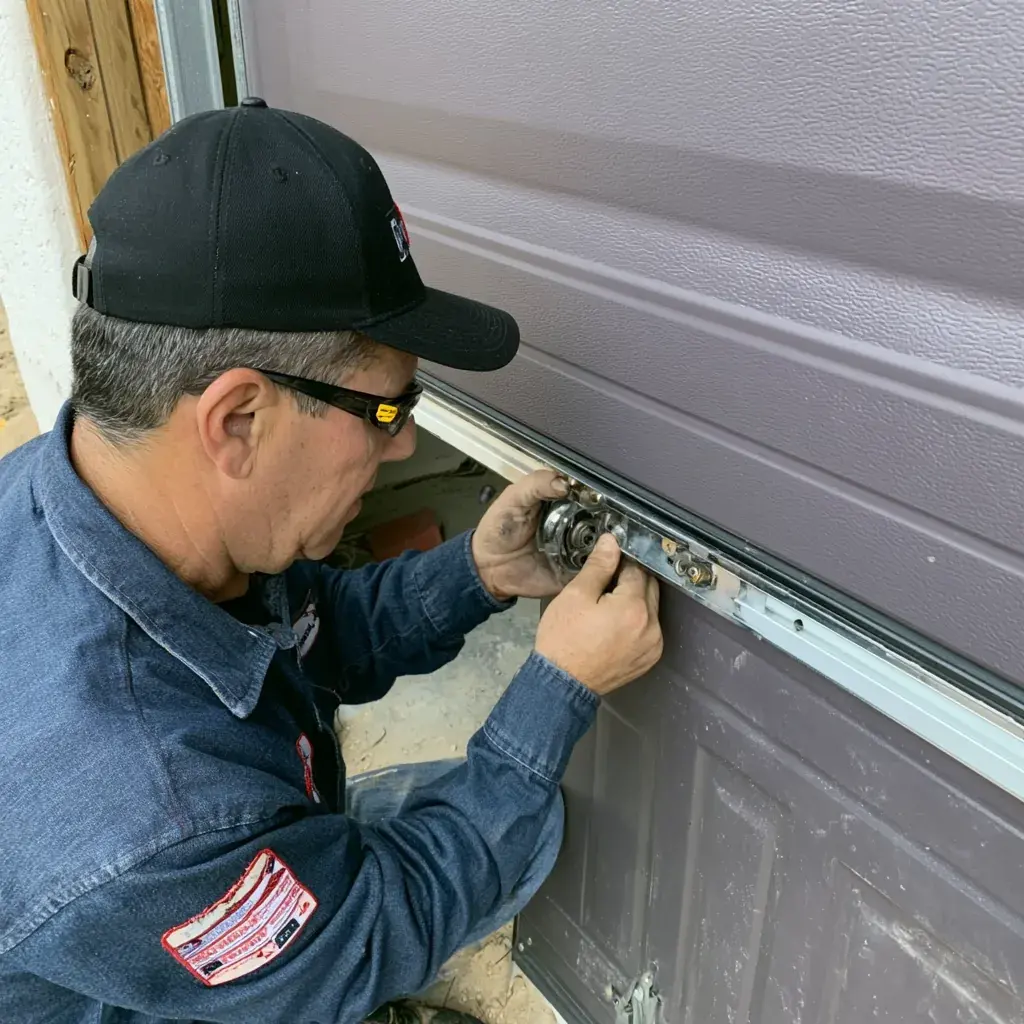
Nylon rollers with worn bearings and steel rollers without grease are the most common source of squealing on Franklin garage doors. Hinges connecting the door panels work the same way, pivoting thousands of times a year with no lubrication unless someone applies it. Homes in older sections near downtown Franklin, where doors have been in service longer, tend to show this wear first. A light coat of garage door lubricant on rollers and hinges often quiets things down within a single application.
Track Alignment Problems
If lubrication does not fix the noise, the track itself may be out of alignment. Tracks bolt to the frame, and over years of use, or after a foundation shift common in homes built on Franklin's clay soils, those brackets can loosen or the track can bend slightly inward or outward. A misaligned track forces rollers to grind against metal at an angle instead of rolling smoothly. This is not a job for tightening bolts blindly, since forcing a bent track back into place can crack it.
Worn Springs Under Tension
Homes in newer Franklin subdivisions like Ladd Park, Berry Farms, and Westhaven often have younger hardware, so a screech there is more likely simple dryness than wear. Older homes near Franklin's historic core, closer to Main Street and Fort Granger, carry more hours on original rollers and hinges, and settling from the area's clay soil can nudge tracks slightly out of alignment over the years. Neither situation is unusual for the area. It just means the fix looks a little different depending on how old the setup is.
Opener Chain Or Belt Noise
A squeal that only happens when the opener runs, rather than throughout the whole door cycle, often traces back to the opener itself. Chain-drive openers need occasional lubrication where the chain rides the rail, and a loose chain can slap and squeal against the housing. Belt-drive openers rarely squeal unless the belt has slipped off track slightly. Either way, this noise is isolated to the motor unit rather than the door panels, springs, or rollers, which narrows the fix considerably.
When It Is Bearings, Not Grease
If lubricating the rollers and hinges does not quiet the door, the roller bearings themselves may be worn out rather than dry. Bearings that have lost their smooth inner surface will grind no matter how much lubricant is applied, because the metal-on-metal contact is inside the roller, not on its surface. This usually shows up on doors that have logged years of daily cycles in Cool Springs or Berry Farms subdivisions with attached garages used constantly. Worn rollers need replacing, not oiling.
Weatherstrip And Seal Noise
Not every unpleasant sound is mechanical. A dried-out bottom seal or side weatherstripping can produce a rubbing squeak as the door closes, especially after a stretch of dry, humid Middle Tennessee weather that hardens the rubber. This sound is lower and more of a rubbery squeak than a metallic screech, and it usually happens only near the very end of the door's travel. Replacing the seal is a simple fix and does not point to a mechanical problem elsewhere in the system.
What Not To Do Yourself
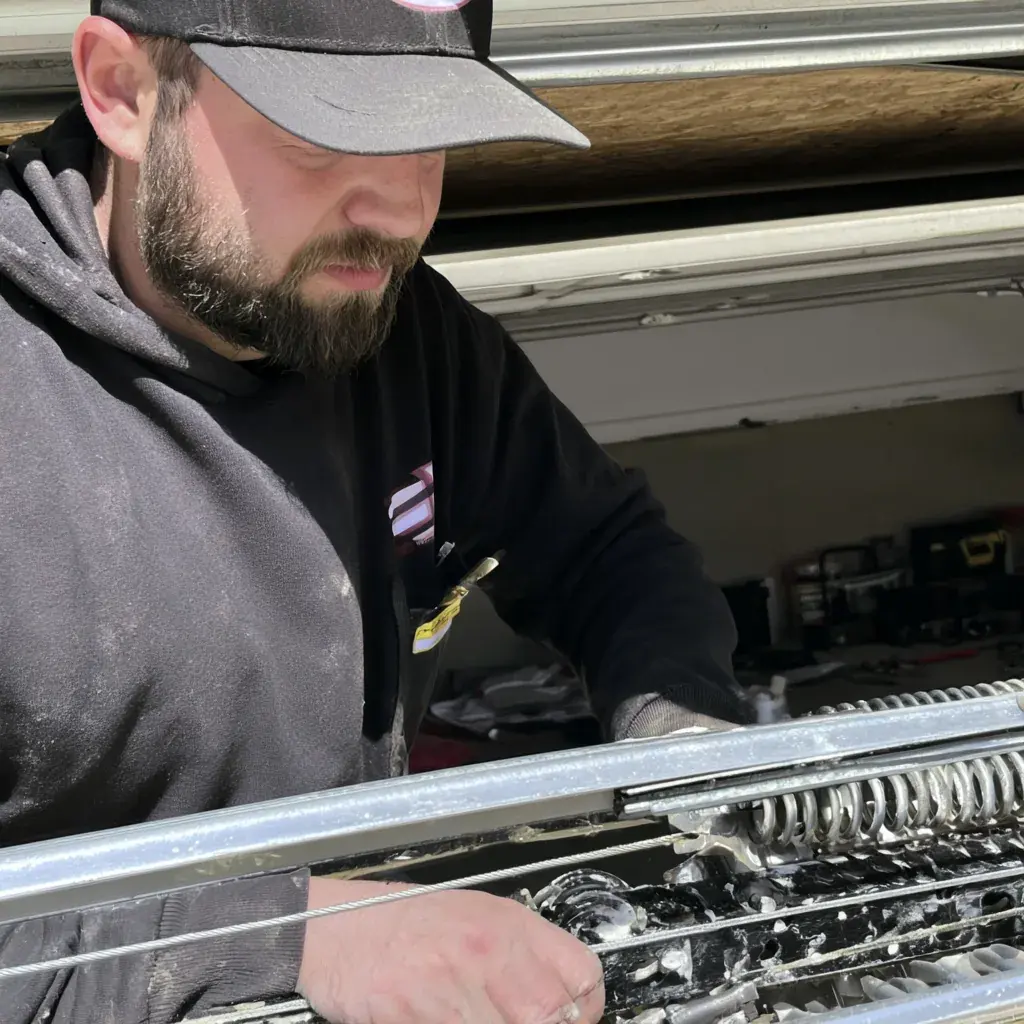
Lubricating rollers and hinges is safe for most homeowners to try. Adjusting or replacing a torsion spring is not, because the coil under tension can cause serious injury if it releases suddenly. The same goes for realigning a bent track, since forcing it can snap the metal or pull it loose from the wall. If the noise is coming from the spring area near the header or from a visibly bent track, stop and let the licensed pros we connect you with take a look.
A Quick Home Check
Before calling anyone, run the door through one full cycle with the garage light on and listen carefully. Check whether the rollers look dry, cracked, or flat on one side. Look at the track for gaps between it and the wall bracket. Confirm the springs are not visibly stretched, rusted, or gapped between coils. This short check takes a few minutes and tells you whether you are dealing with a simple lubrication job or something that needs a trained eye.
Letting It Go Too Long
A squealing door that gets ignored tends to get worse, not better. Dry rollers wear down faster once they start grinding, and a track that is slightly out of alignment will keep shifting under the door's weight with every cycle. What starts as an annoying noise in a Westhaven or Fieldstone Farms garage can turn into a stuck door or a broken spring within a few months. Addressing the noise early is almost always less involved than fixing what it eventually causes.
Getting It Looked At
A screech alone is rarely urgent, but it's worth stopping and calling if the noise comes with jerking, uneven movement, or a door that hesitates partway through its cycle. Those signs suggest something beyond dry hardware, and pushing the door through repeated cycles at that point risks turning a small fix into a bigger one. If you're in Franklin and unsure whether what you're hearing is normal wear or something more, the licensed pros we connect you with can take a listen and tell you which one it is before it gets worse.
Dealing with this in your home?
Franklin's clay soil swells after storms rolling through Cool Springs and settles again once things dry out near the Harpeth River, and a garage door track anchored to a slab or crawl space foundation shifts right along with it. Homeowners near McKay's Mill or off Del Rio Pike often notice the door binding on one side first, right when the ground moves.