A Franklin homeowner will notice a garage door acting older than it is and wonder what caused it. Summer here is not just warm, it is wet, and that moisture sits on metal and wood for months at a stretch. Springs pick up a dusting of rust, hinges start to squeak sooner, and a panel near the bottom edge feels swollen to the touch. None of this is dramatic. It builds slowly, season after humid season, until the door simply stops moving the way it used to.
Rust Forming on Springs and Cables
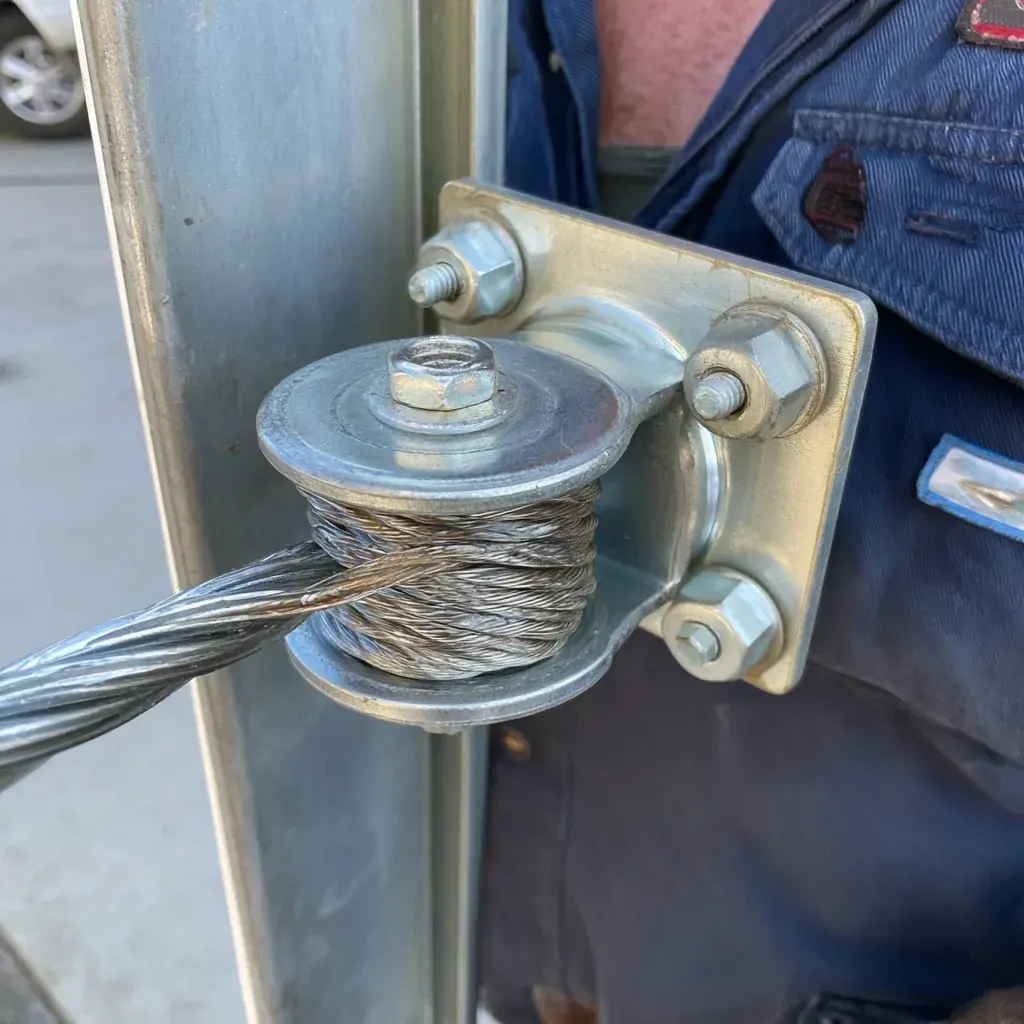
Start with the torsion spring above the door and the cables running down each side. Both are bare steel, and Franklin's humid air keeps a thin film of moisture on them even when the garage looks dry. Over several summers that film turns to surface rust, first a dull orange dusting, then flaking. Rust on a spring changes how the coil flexes, and a flaking spring is doing less work than it looks like it's doing.
Wood Panels Swelling With Moisture
Hinges and rollers pick up the same rust in a quieter way. A hinge pin coated in humidity-driven rust binds slightly every time the door cycles, so the panel stops swinging as freely at that joint. Rollers with rusted stems or bearings stop turning smoothly and start dragging against the track instead. None of it happens fast enough to notice day to day, which is exactly why it goes unaddressed in most Franklin garages.
A Bottom Seal Gone Brittle
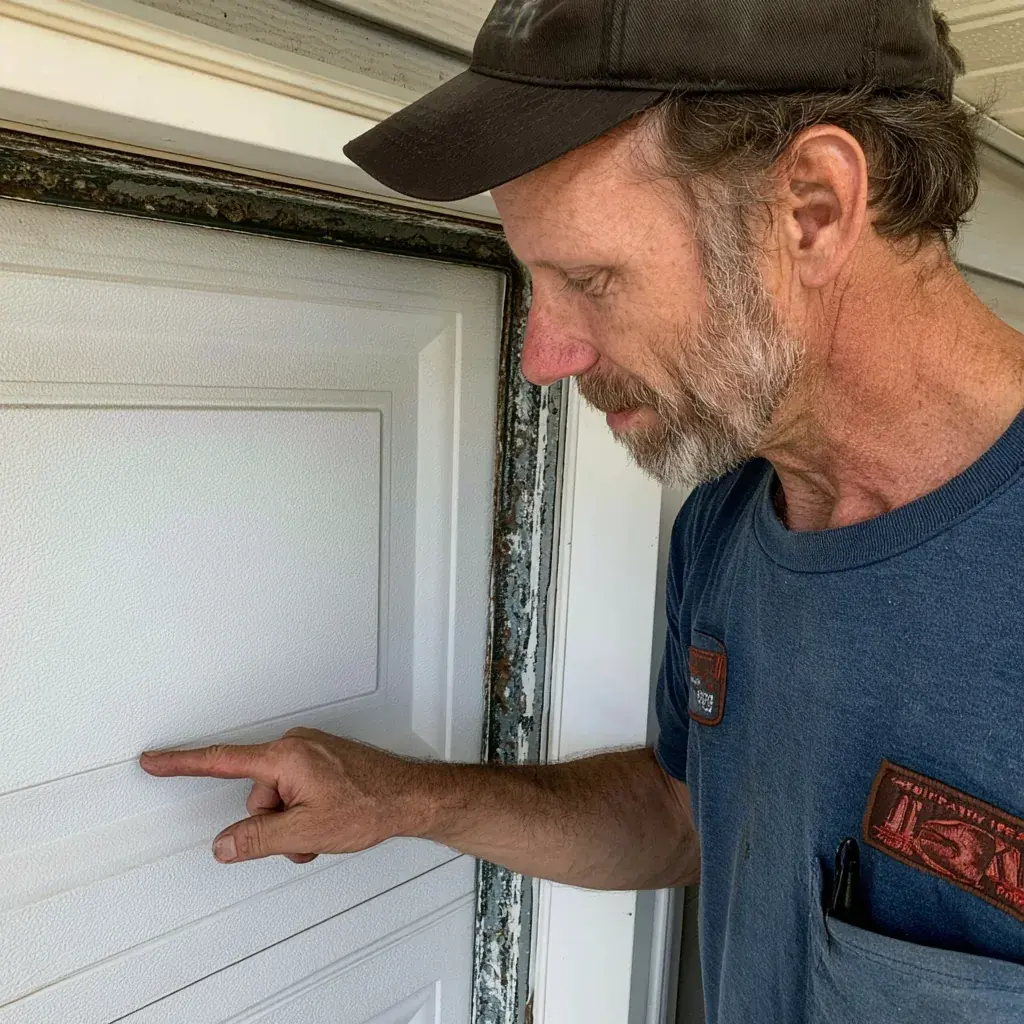
Wood-panel doors, common on older homes near historic downtown Franklin, respond to humidity differently than steel. Wood pulls in moisture from the air itself, not just from rain, and swells at the panel edges and seams. A door that used to close flush against the frame starts catching or needing extra push. That swelling also opens hairline gaps as the wood dries back out between humid stretches, and paint or sealant can't keep pace with that back-and-forth.
Rollers Turning Gummy and Slow
Rollers depend on a thin film of lubricant to move smoothly through their tracks, and Franklin's damp air works against that. Moisture creeps into the grease over months, and instead of drying out, it turns gummy and starts collecting grit from the garage floor. A roller coated this way drags rather than rolls, and the door starts making a grinding sound on its way up. Left alone, that drag transfers strain to the opener motor, which has to work harder for the same result.
Hinges That Bind Instead of Swing
Rollers stiffen for a reason separate from rust. Grease and lubricant absorb some ambient moisture over a Franklin summer, and that changes their consistency just enough to slow how freely a roller spins in its track. The door doesn't stop working, it just asks more of the opener to do the same motion. That extra strain shows up gradually as a slower cycle time or a faint grinding sound near the top of the track.
Track Brackets Loosening Over Time
An opener mounted at the ceiling of an unvented garage sits in the same humid air as everything else, and its circuit board is not immune to it. Moisture that collects on a board over years can corrode contact points and connections in ways that are hard to see without opening the housing. A homeowner in a newer subdivision like Ladd Park with a fully sealed garage may actually see this sooner, since there's less airflow to dry things out between humid spells.
Paint and Finish Failing Early
Fasteners are worth a separate look. The screws holding hinges, brackets and track sections to the frame are usually plain steel, and humidity works on the exposed threads and heads first. A screw that's rusted at the head can still hold, but the metal underneath is thinner than it looks, and that's the kind of failure that shows up all at once rather than gradually.
Electronics Behind the Opener Panel
None of this moves at the same pace across every part. Springs and cables show rust within a couple of humid seasons because they're bare metal with no coating to slow it. Wood swelling takes longer, often years, since it depends on how many wet-to-dry cycles the panels go through. The bottom seal's timeline depends mostly on how much of it stays in contact with damp concrete rather than lifted air.
Signs the Moisture Is Winning
A few signs tend to show up together on a Franklin garage door that's been fighting humidity for years: visible orange rust at the spring coils or cable ends, a bottom seal that's gone hard and cracked instead of staying pliable, panel seams on a wood door that no longer sit flush, and rollers that sound different than they used to. Any one of these alone is minor. Several together usually means the moisture has been working for a while.
Why This Differs From a Flood
This is a slower story than what heat does to a garage door in a drier climate. Heat swells metal and softens adhesive on a predictable daily cycle that mostly resets overnight. Humidity in Franklin doesn't reset the same way. It sits, it seeps into porous materials like wood and thin lubricant films, and it corrodes metal a little at a time across an entire season rather than a single afternoon.
What Franklin Homeowners Ask Next
None of this means a humid summer wrecks every garage door in Williamson County, but it does mean the parts that are bare metal, porous wood, or in constant contact with damp concrete are working against the climate every day they sit here. Catching the rust or the swelling early is mostly a matter of knowing where to look before it changes how the door moves.
Dealing with this in your home?
Franklin's clay soil swells after storms rolling through Cool Springs and settles again once things dry out near the Harpeth River, and a garage door track anchored to a slab or crawl space foundation shifts right along with it. Homeowners near McKay's Mill or off Del Rio Pike often notice the door binding on one side first, right when the ground moves.