Somebody in Cool Springs or off Del Rio Pike notices water creeping under the garage door after a hard rain, or a cold draft settling across the slab on a January morning. The first question is usually whether that's normal wear or something that needs fixing now. Franklin sees both heavy spring storms and the occasional cold snap, and either one can expose a seal that was already failing. The part matters, because there isn't just one seal doing the work.
Begin With the Bottom Seal
The bottom seal is that rubber strip tucked into the metal channel along the base of the door, and it takes more abuse than any other seal on the unit. Every open and close drags it across the concrete, so grit wears it thin long before the astragal or stop molding show similar wear. If daylight shows under the corners while the door sits closed, that strip has flattened out and stopped doing its job.
How You Know It's Gone
A bottom seal that's given out is easy to spot: it feels stiff instead of pliable, it's cracked or split along its length, or it's pulled free from the track and no longer sits flush against the slab. Push a flashlight beam under the closed door at night. Light bleeding through in a steady line, rather than just at the corners, points to this seal, not the others.
The Astragal Is Different
On a two-car door built as a double panel, the astragal is the vertical strip running down the center seam where the panels meet. It's a different shape and a different mount than the bottom seal, so one wearing out doesn't mean the other has too. A gap here shows up as a thin vertical line of daylight down the middle of the closed door.
What the Stop Molding Covers
Stop molding runs along both sides and across the top of a Franklin garage door frame, sitting where the door's face meets the jamb. It blocks the gap a draft would otherwise slip through and helps the bottom seal and threshold do their job below. Some setups pair it with an astragal at the center meeting point for a tighter seal. When this trim splits, warps, or pulls loose from years of temperature swings, cold air and moisture find their way past it before you notice anything else wrong.
Why the Threshold Counts
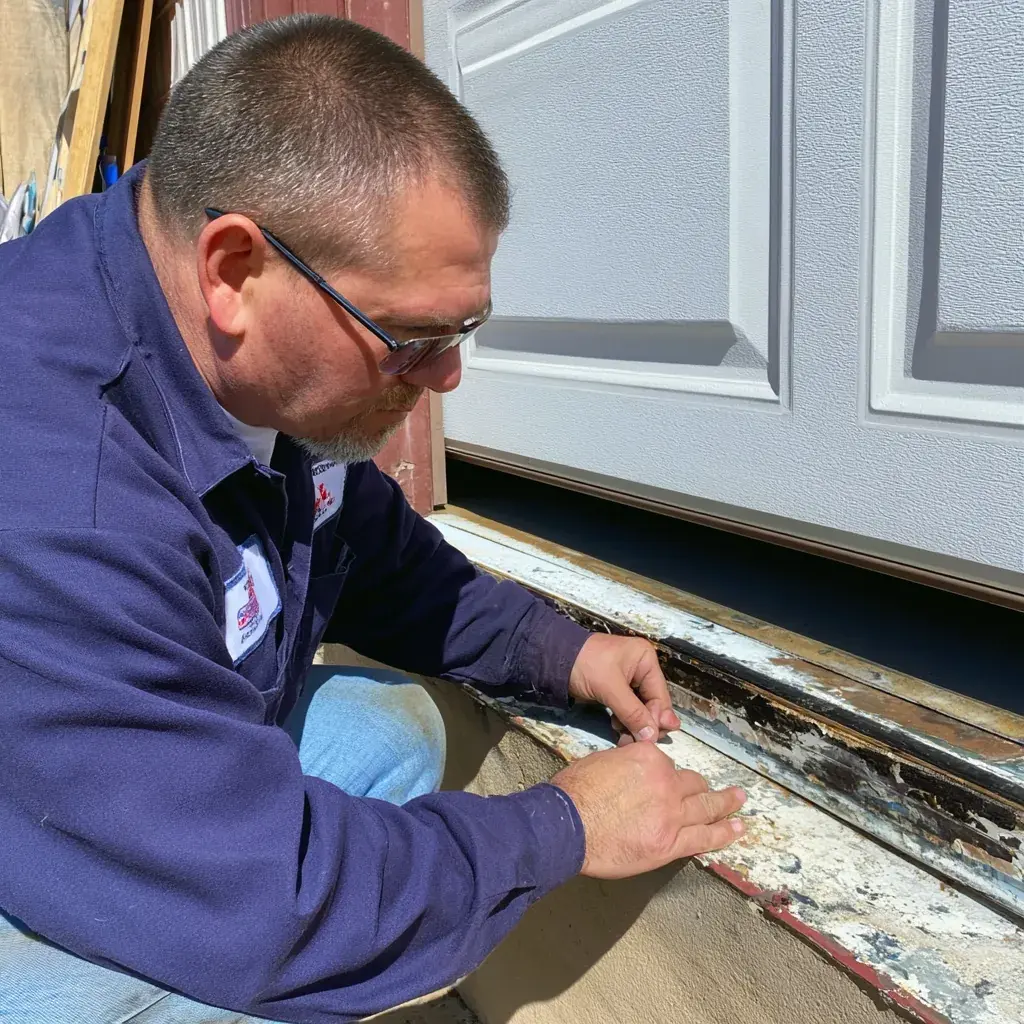
Not every Franklin garage has a threshold, but where poured concrete slopes or a rubber strip has been added at the slab, it's meant to close the gap the bottom seal alone can't reach, especially on driveways with any pitch. Homes off Del Rio Pike and other spots where runoff crosses the slab lean on this piece most, since water finds the low edge before it finds anything else.
Storm Water and Seal Wear
Franklin's flood history, including the 2010 flood that put the Harpeth River well above its banks, is a reminder that low-lying garages near the river or Spencer Creek see real water exposure during heavy storms. Repeated soaking softens rubber and works dirt into the bottom seal faster than dry weather ever would. Homes in Westhaven or Berry Farms near drainage low points are worth a closer look after any big spring storm.
What a Cold Snap Does
Franklin's winters aren't severe, with normal lows only dipping into the 30s, but an occasional hard cold snap still stiffens rubber seals overnight. A bottom seal that was already thin from years of dragging across the driveway can crack the first time it's forced to flex in the cold instead of bending smoothly. That's often when a slow leak turns into a seal somebody finally notices.
What Each Repair Costs
Bottom seal replacement tends to be the cheapest fix here, since it's a strip that feeds into a track already built into the door. The astragal costs a bit more given its length and the precision needed at the center seam. Stop molding runs higher still, since it's carpentry, not just a rubber swap, and a threshold repair depends on whether the slab itself needs work.
When Nothing Needs Replacing
Sometimes nothing needs buying at all. A bottom seal that's slipped its track, or stop molding pulled loose from the jamb by a stuck door, can often be reseated by the licensed pros we connect you with without new material. Worth checking before assuming a Cool Springs or Grassland service call means a parts bill.
Check the HOA Rules First
Neighborhoods like Governors Club, Westhaven, and Laurelbrooke often have architectural guidelines that cover more than paint color, and seal or trim color can sometimes fall under that same review. It's worth checking before ordering replacement material in a shade that doesn't match what's approved. A quick look at the HOA's covenant documents saves a second trip later.
Not Sure Which Seal Failed
A bottom seal, an astragal, and stop molding can all show the same symptom, so it helps to look at where the light or draft actually enters. If daylight shows along the slab under a closed door in a Cool Springs garage, that points to the bottom seal. If the gap runs down the middle where two door panels meet, that's the astragal. Light along the sides or top of the frame usually means the stop molding has pulled away or hardened. A quick look with a flashlight from inside, door closed, usually settles which one it is before anyone orders a part.
Dealing with this in your home?
Franklin's clay soil swells after storms rolling through Cool Springs and settles again once things dry out near the Harpeth River, and a garage door track anchored to a slab or crawl space foundation shifts right along with it. Homeowners near McKay's Mill or off Del Rio Pike often notice the door binding on one side first, right when the ground moves.