A garage door in Franklin does not usually fail out of nowhere. The torsion spring carries almost all the weight, and when it starts to wear, the door changes how it acts before it quits outright. Homeowners in Cool Springs and Westhaven often notice the change on a Saturday, mid-cycle, and wonder if it is worth a call or just a fluke. It is rarely a fluke. The door is telling you something, and the telling usually starts small.
The Gap in the Coil
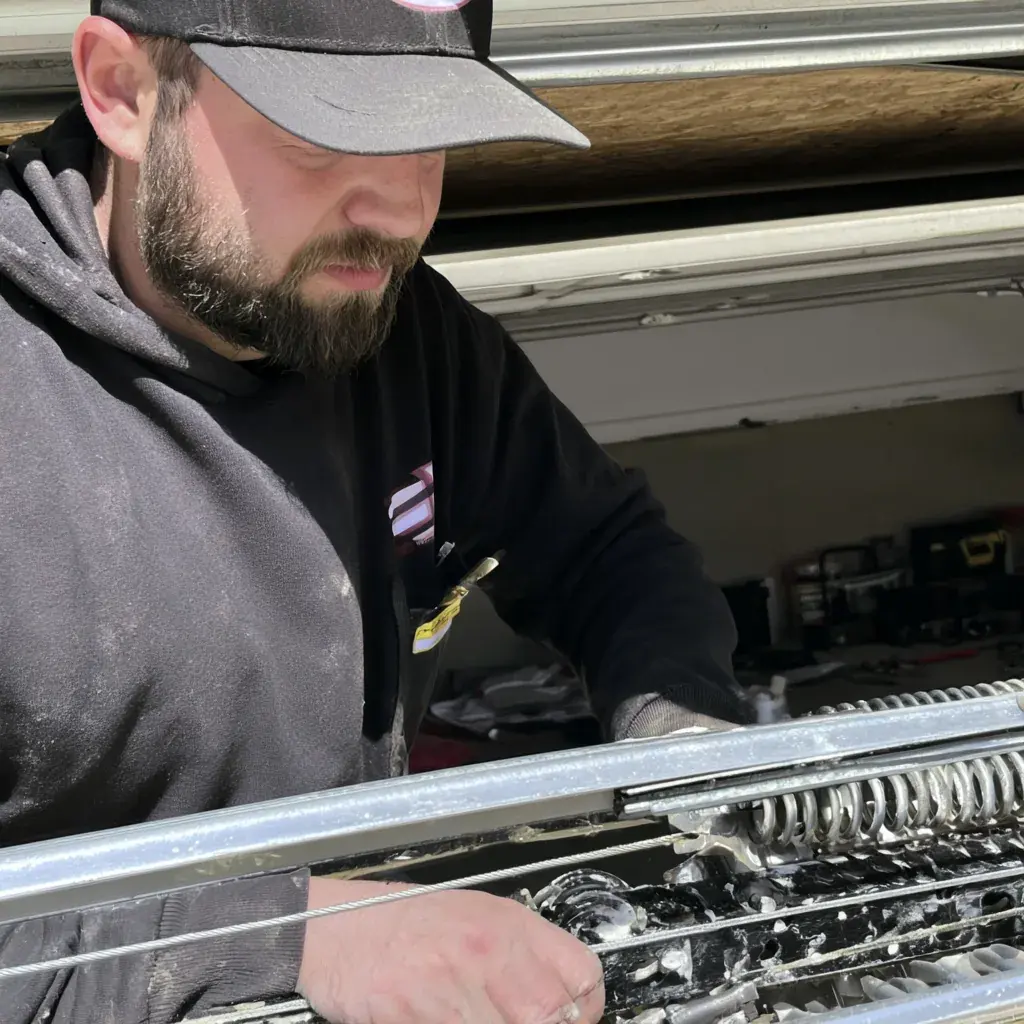
A torsion spring wraps in tight loops on a bar above the door, and each loop should touch its neighbor. When metal fatigues, one loop pulls away from the rest, leaving a visible gap in the coil. That gap means the spring has lost tension it can no longer recover. Homeowners in Westhaven or Fieldstone Farms often spot it while checking why the door suddenly feels heavy by hand or starts a jerky travel partway up the track.
Heavy by Hand
Disconnect the opener and try raising the door yourself. A spring carrying its share of the load lets the door rise with steady, light resistance the whole way up. If it feels heavy by hand, drags at the knees, or wants to drop once you let go, the spring has stopped doing its job. Homeowners in Westhaven and Cool Springs notice this most on wider two-car doors, where a weak spring shows up faster than on a single-car opening.
Jerky Travel on the Cycle
Stand back near the front of the driveway and follow the door with your eyes from bottom to top, not just at the start. A door on a failing spring often moves smooth for the first foot, then stutters, shudders, or lurches partway up as the remaining tension runs out unevenly. That jerky travel is different from a track problem, which usually drags at one fixed spot every single cycle. Grassland and Fieldstone Farms homes with older openers tend to mask this shudder until it gets worse.
An Opener Working Too Hard
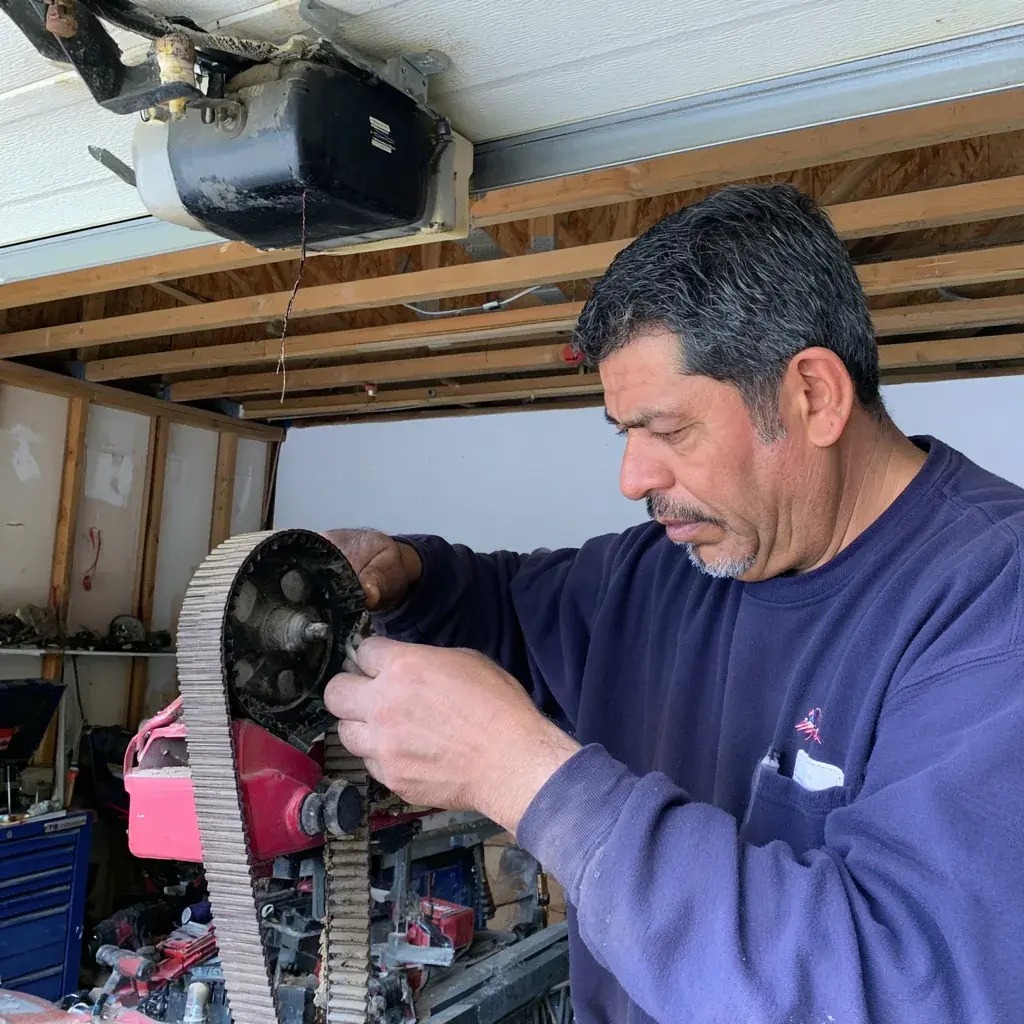
The opener motor is built to help guide a door that's already balanced, not to drag the full weight up the track by itself. When a spring loses tension, the motor picks up the slack, and you'll hear it. A louder hum, a slower climb, or the unit straining near the top of the run are signs it's compensating for a job the spring used to handle in Franklin garages.
Why Cold Mornings Show It First
Franklin winters are mild by most standards, with lows normally holding near 30 degrees Fahrenheit, but spring steel still stiffens in a cold snap. A coil that was only slightly worn in October can show a wider gap or heavier lift on a January morning. Homeowners near Old Town or Historic Downtown Franklin sometimes notice the change first thing, before the garage warms with the day. Cold does not cause the wear, but it tends to expose it faster than warm weather does.
What Cycle Count Tells You
Manufacturers rate torsion springs for a set number of open-close trips before the steel gives out. That cycle count isn't printed on the door itself, but the pattern shows up in how the spring behaves. A garage used several times a day in Berry Farms or Sullivan Farms burns through its rated cycles faster than one opened once daily near Old Town. Once a spring nears that limit, replacing it before failure costs far less than a broken door and a stuck car.
Moisture and Grit at Floor Level
Franklin's clay soil shifts with the seasons, and older homes near Old Town or Downtown Franklin can see a garage frame settle slightly out of square over the years, which puts extra strain on a spring already doing its job. Newer slab homes in Berry Farms or Sullivan Farms mostly avoid that shift, but a spring there still wears down the same way, through cycles and time, not through the foundation under it.
Storm Season and Panel Stress
Middle Tennessee's spring storm season, roughly March through May, brings hail and high wind to Williamson County most years. A wide double door can rack under straight-line wind from a pop-up thunderstorm, putting uneven strain on the spring even when the panels show no visible damage. This kind of stress is easy to miss because nothing looks wrong from the driveway. A door in Legends Ridge or Laurelbrooke that suddenly jerks after a storm may be reacting to wind load the spring absorbed, not a new defect in the door itself.
Neighborhood Review and Timing
Homes in planned sections of Franklin, including parts of Ladd Park and Westhaven, often follow design guidelines that shape what's visible from the street, so a spring replacement rarely runs into anything beyond normal scheduling. The bigger factor is simply booking a time that works, whether that's early morning near Berry Farms before errands start or an evening slot after commuters clear Mack Hatcher Parkway. Same-day service is usually available once the spring's condition is confirmed.
What a Written Scope Should Show
If a garage door in Franklin needs new springs, the pros who show up should hand over a written scope before touching anything. That page ought to list the spring wire diameter and length, plus how many open-close cycles it is rated for, so a Cool Springs or Berry Farms homeowner can compare one quote against another. It should also note whether one spring is being swapped or both, since replacing only the worn side often throws the door off balance again within months.
When the Signs Stack Up
One warning sign by itself is worth noting and rechecking in a week. A door near Westhaven or Fieldstone Farms that only feels a touch heavy by hand, with no other symptom, may still have some life left. It is the pileup that matters: a widening spring gap, jerky travel on the way up, and an opener motor working harder than it used to, showing up together, means the spring is past the point of watching and into the point of replacing.
Dealing with this in your home?
Franklin's clay soil swells after storms rolling through Cool Springs and settles again once things dry out near the Harpeth River, and a garage door track anchored to a slab or crawl space foundation shifts right along with it. Homeowners near McKay's Mill or off Del Rio Pike often notice the door binding on one side first, right when the ground moves.