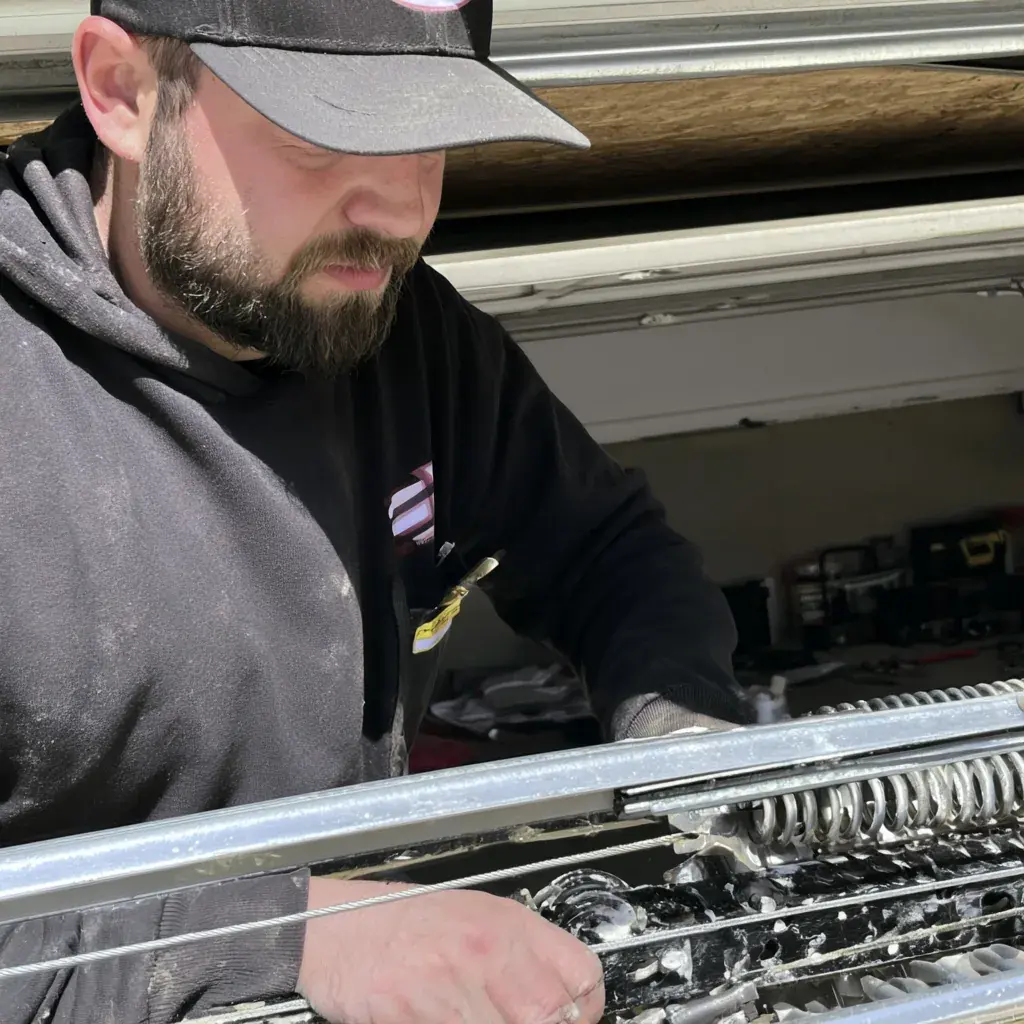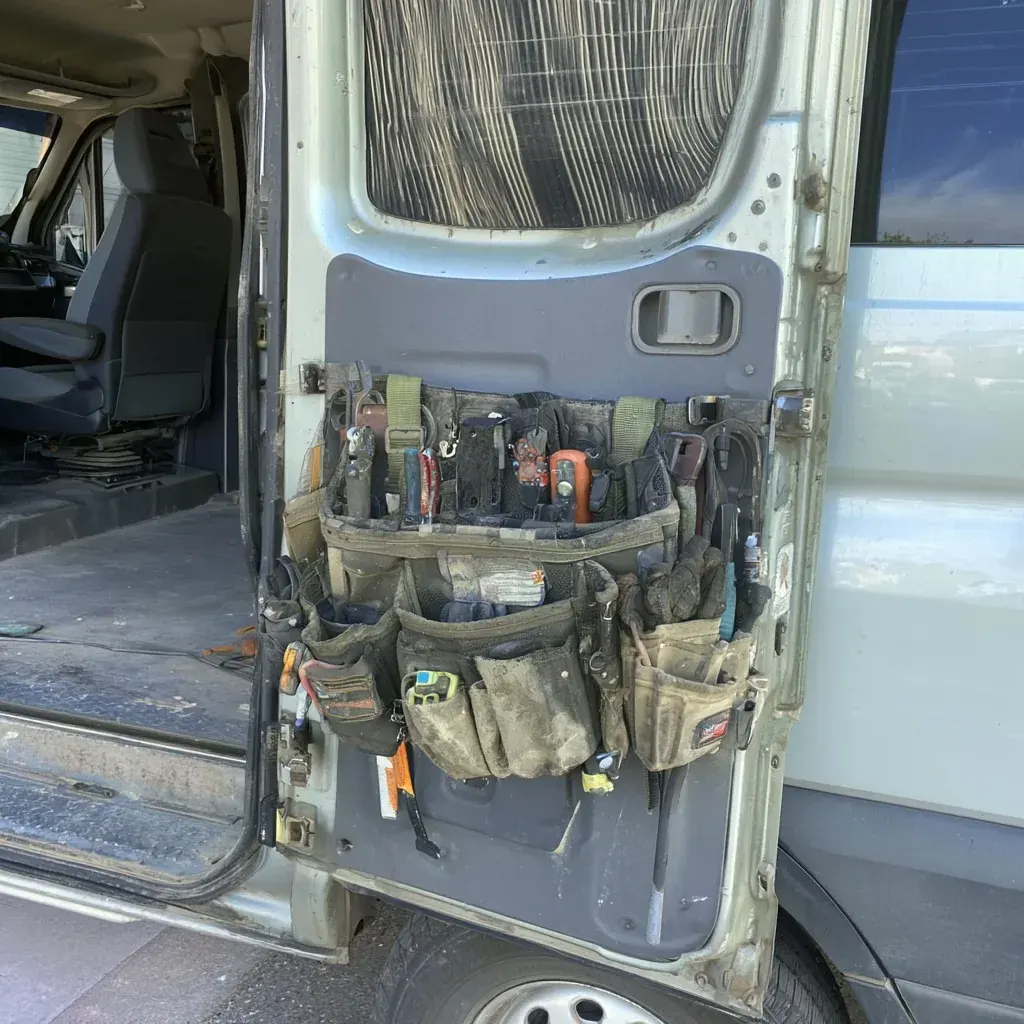
A garage door in Franklin that suddenly won't lift raises one question before any other: is this worth paying to fix. There's no single answer that covers every door. A cheap cable snap on a five-year-old door in Berry Farms is a different case than a frame pulled loose on a door that's been fighting the same crossover for a decade near Grassland.
Which Faults Cost Little To Fix
Springs get blamed for a lot, but a broken torsion spring rarely settles this question by itself. It's a predictable failure on a predictable schedule, and swapping one doesn't touch the panels, the frame, or the opener. Franklin homes with doors from the 1990s building boom are still running original springs in some cases, and replacing one is routine work, not a signal that the whole door is done.
Wear Items Versus Real Failures
Rollers, hinges and cables wear out on a schedule that has nothing to do with the door's overall health, the same way brake pads wear without meaning the car is finished. A cable that's frayed near the drum or a hinge that's loosened at the section joint gets replaced without much debate. These are consumable parts on doors all over Franklin, from Westhaven to Fieldstone Farms, and the fix stays cheap because nothing structural is involved.
A Section That's Taken A Hit
A dented or cracked section, the kind that happens when a bike or a bumper catches the bottom panel, can often be ordered and swapped without redoing the rest of the door, as long as the manufacturer still makes a matching one. Older doors around Franklin's historic downtown sometimes run into trouble here, since a section made decades ago may not have a current match. When that happens, one dent can push the job toward full replacement.
When The Frame Itself Is Off
The frame is a separate concern from the sections it holds. A frame that has rusted at the base, racked out of square, or pulled away from the opening changes how the whole door rides in its tracks, and that kind of damage doesn't stay fixed with a patch. Homes on older lots around Downtown Franklin see this more than newer builds in Westhaven, where framing is still square and settling hasn't had decades to work on it.
What A Hard Freeze Does To Old Parts
Franklin winters run mild most years, with lows near 30 degrees Fahrenheit being normal rather than extreme. But an occasional cold snap still finds the weakest link in an aging door. Stiff grease, brittle weatherstripping, and a spring that's already lost tension can all fail together during one sharp overnight drop. A door that survived years of ordinary use sometimes doesn't survive that one cold morning, and that timing is rarely a coincidence.
Flooding And What It Leaves Behind
Water damage leaves its own signature. A door that sat in standing water during a heavy rain event can have swollen bottom sections, corroded hardware, or wiring that fails months later instead of right away. This shows up more in low-lying stretches near the river than on higher ground toward Cool Springs. A door that's been through that kind of soaking is worth a full check, not just a wipe-down and a new bottom seal.
When Repair Stops Making Sense
One repair rarely settles the question by itself. Watch for a second unrelated failure inside a year, especially when it hits a different section of the same door. A cracked bottom section paired with a worn hinge higher up is two problems, not one. On older Franklin homes near downtown, frames can shift slightly with the ground beneath them, and once the frame is out of square, new hardware fights that shift instead of fixing it, so the same repair bill shows up again.
Openers Wear Out On Their Own Terms
The opener keeps its own schedule, separate from the door itself. A belt or chain drive installed when a Cool Springs or Berry Farms subdivision was first built may still run, but weaker circuit boards from that era can trip force sensors or stall on cold mornings. If the opener struggles only in a cold snap, that points to the unit, not the door. Replacing just the opener costs far less than replacing the whole system, so it's worth ruling out before assuming the door is the failing part.
What Shows Up At Resale
Resale is where this stops being theoretical. A buyer touring a home near Berry Farms or Westhaven notices a door that sags at one corner or doesn't sit flush against the frame, even without knowing why. That impression affects how the whole property reads, not just the garage. A door in good repair, or one that's been honestly replaced instead of patched again, tends to raise fewer questions during an inspection in Franklin.
Ask What The Estimate Is Really Saying
If a quote moves from one failed part directly to a full replacement, it's fair to ask exactly which failure rules out a repair. Sometimes the answer is a frame that's genuinely beyond fixing. Other times it's a section no longer made, or an opener not worth pairing with new hardware. A vague answer is worth pushing back on before agreeing to anything on a Franklin garage door.
Getting A Straight Answer On Yours
Nobody can settle this over the phone with any honesty. A crossover in the track, a section that's racked, a frame pulling away from the wall in a home near the Harpeth River — these change the math, and none of them show up in a description of noises and symptoms. What holds true from Cool Springs to Historic Downtown Franklin is that a door earns a real answer once someone stands in front of it, checks the frame square, and separates what's cheap to fix from what's quietly draining resale value. Guessing first just wastes the visit.
Dealing with this in your home?
Franklin's clay soil swells after storms rolling through Cool Springs and settles again once things dry out near the Harpeth River, and a garage door track anchored to a slab or crawl space foundation shifts right along with it. Homeowners near McKay's Mill or off Del Rio Pike often notice the door binding on one side first, right when the ground moves.