Franklin homeowners near Del Rio Pike and out toward College Grove ask this once their door starts sticking on humid mornings. Once a year keeps a door in daily use running right, but gravel drives and long private lanes push grit into the rollers faster than a paved subdivision street ever would. A yearly visit checks balance, tightens loose hardware, and re-lubricates the moving parts before that grit turns into grinding paste. Between visits, wipe the tracks and listen for new noise. That's usually the first sign something needs attention sooner.
Why Clay Soil Changes The Math
An annual interval assumes a track that stays square. Franklin sits over shallow limestone bedrock with clay soil on top, and that clay shrinks and swells as moisture changes through the year. Older homes near Franklin Battlefield or newer ones in Fieldstone Farms can both see slow foundation movement that nudges a garage door frame out of alignment, which puts uneven strain on rollers and hinges between scheduled visits.
What Foundation Shift Actually Does
That grit is the real driver of the shorter interval. Spring pollen is the real driver of the shorter interval here. It settles into open hardware, mixes with whatever lubricant is already there, and turns into a paste that holds moisture against bare steel. Add a humid Williamson County summer in an unconditioned garage and the rollers, hinges and cable ends carry a film of surface rust by autumn, which is what makes an annual visit worth booking before the first cold snap rather than after it.
Humidity And Cold Add Their Own Wear
Franklin's humid summers swell wood-frame garage openings and can make weatherstripping stick or tear when the door cycles. Winter runs the other direction: normal lows near 30 degrees Fahrenheit, with regular nights below freezing, stiffen rubber seals and thicken old lubricant on springs and hinges. A door that felt fine in July can start groaning by January, not because anything broke, but because the materials responded to the season.
What A Cycle Count Actually Tells You
A cycle count matters more than the date on the calendar. A door in Berry Farms or Westhaven that opens four or five times a day for school runs and errands has logged more wear by June than a rarely used detached garage downtown near Main Street sees in two years. Franklin households with two working adults and kids in after-school activities tend to run their doors harder than the once-a-year default assumes, which is worth factoring in before deciding a visit can wait.
What A Balance Test Checks
A balance test checks whether the door holds its position, roughly waist height, once it is disconnected from the opener and left on spring tension alone. A door that drifts upward or sinks down is telling you the springs are no longer matched to the door's weight, and that mismatch is exactly what makes an opener strain and a cable wear faster than it should. This test takes a few minutes and says more about a door's condition than listening for noise ever will.
Lubrication Matters, But Only If Done Right
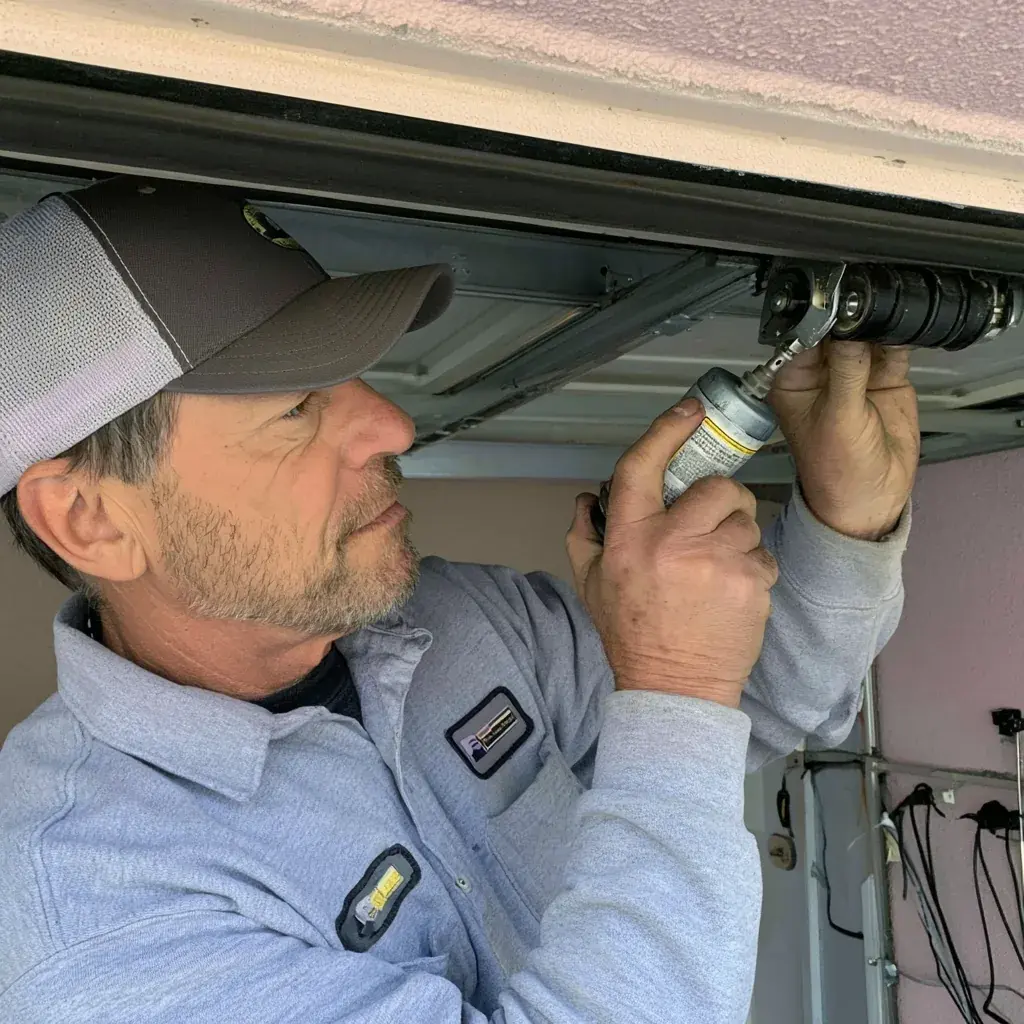
Lubrication only helps if it's applied to clean hardware. Adding fresh oil over old grease and dust on rollers and hinges near Carothers Parkway or Liberty Pike just traps grit against moving parts instead of easing them. Rollers, hinges, and the torsion spring itself each need a light coat of the right lubricant, wiped clean first, not a heavy spray that runs down into the track and attracts more debris over time.
What A Service Visit Covers
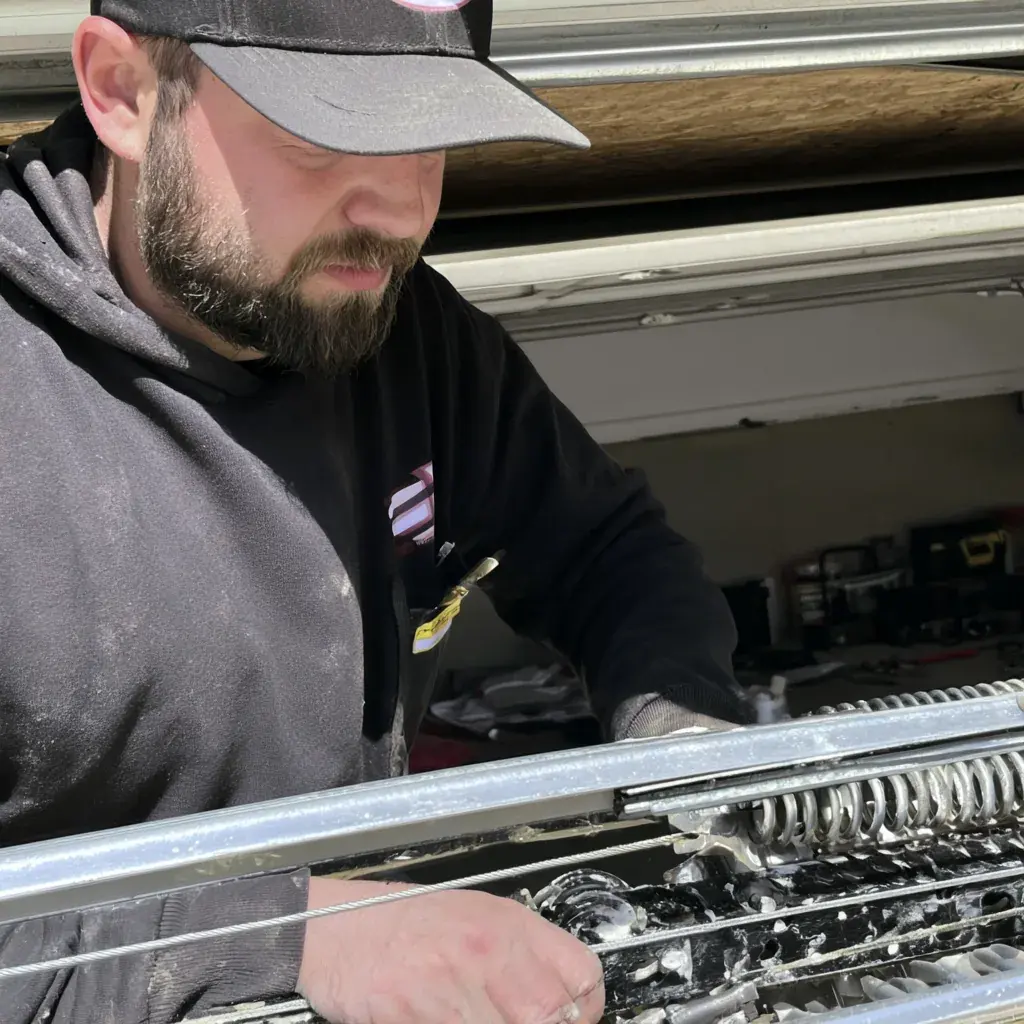
A service visit from the licensed pros we connect you with usually runs a balance test first, since a door fighting its springs wears the opener and the cables faster than normal cycle count would predict. From there it covers lubrication of rollers and hinges, a check of cable fray, and tightened hardware on the track brackets. Between visits, a homeowner can wipe down tracks and listen for new grinding sounds, especially on longer driveways feeding homes near McKay's Mill or Berry Farms.
What A Homeowner Can Do Between Visits
Between annual services, wiping down the tracks with a dry cloth keeps dust and pollen from building into grime that grinds against the rollers. Checking that the weatherstripping along the bottom of the door still sits flush, especially after a hard freeze, catches gaps before they let in cold air or water. Listening for new grinding or popping sounds is often the earliest sign something needs a closer look.
When The Interval Should Shorten
Shorten the interval if the door sits near Carters Creek or a low spot off the Harpeth River, where the 2010 flood showed how much water can reach a bottom panel. Homes with a heavy cycle count, like a household running the door morning and night, wear rollers and hinges faster too. If the opener strains, reverses oddly, or the spring looks pitted with rust before autumn, do not wait for the yearly visit near Berry Farms or Westhaven to have it looked at.
After A Missed Year Or A Flood Scare
A door that went untouched through a year in a Grassland or Berry Farms crawl-space home is worth a full balance test before winter, not just a glance. Springs left unwound and cables left unchecked after a summer of Middle Tennessee humidity often show rust nobody noticed. If a garage near the Harpeth River took on standing water at any point, the licensed pros we connect you with should look at the bottom panel, seals and electronics before that door gets trusted with a car parked under it again.
Two Reasons To Call Sooner
The once-a-year interval exists because Franklin driveways are not uniform, and neither is how often a door opens. A homeowner deciding whether to wait another season should weigh both: what the drive is made of and how many times the door cycles in a normal week. A door on a gravel or crushed-stone approach near Grassland, or one running several cycles daily in Berry Farms, has earned its inspection well before the year is out.
Dealing with this in your home?
Franklin's clay soil swells after storms rolling through Cool Springs and settles again once things dry out near the Harpeth River, and a garage door track anchored to a slab or crawl space foundation shifts right along with it. Homeowners near McKay's Mill or off Del Rio Pike often notice the door binding on one side first, right when the ground moves.