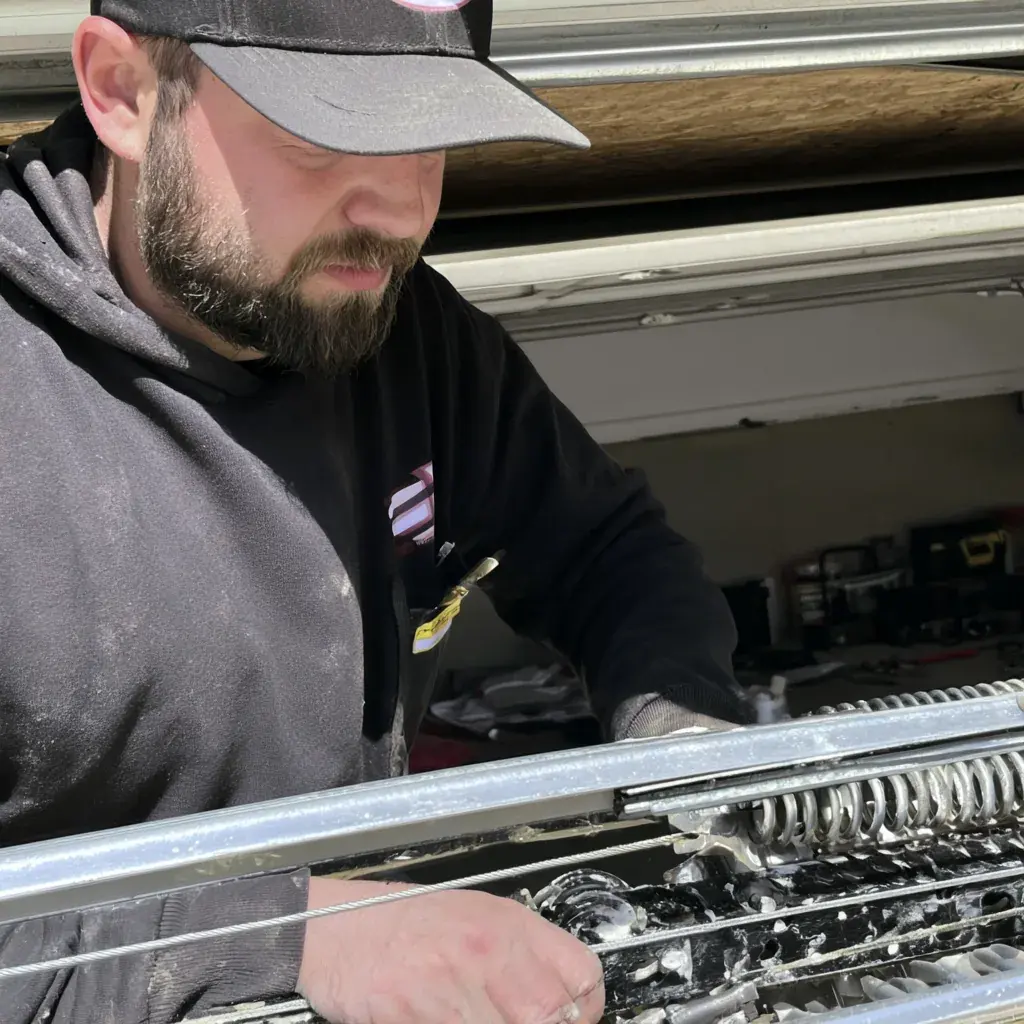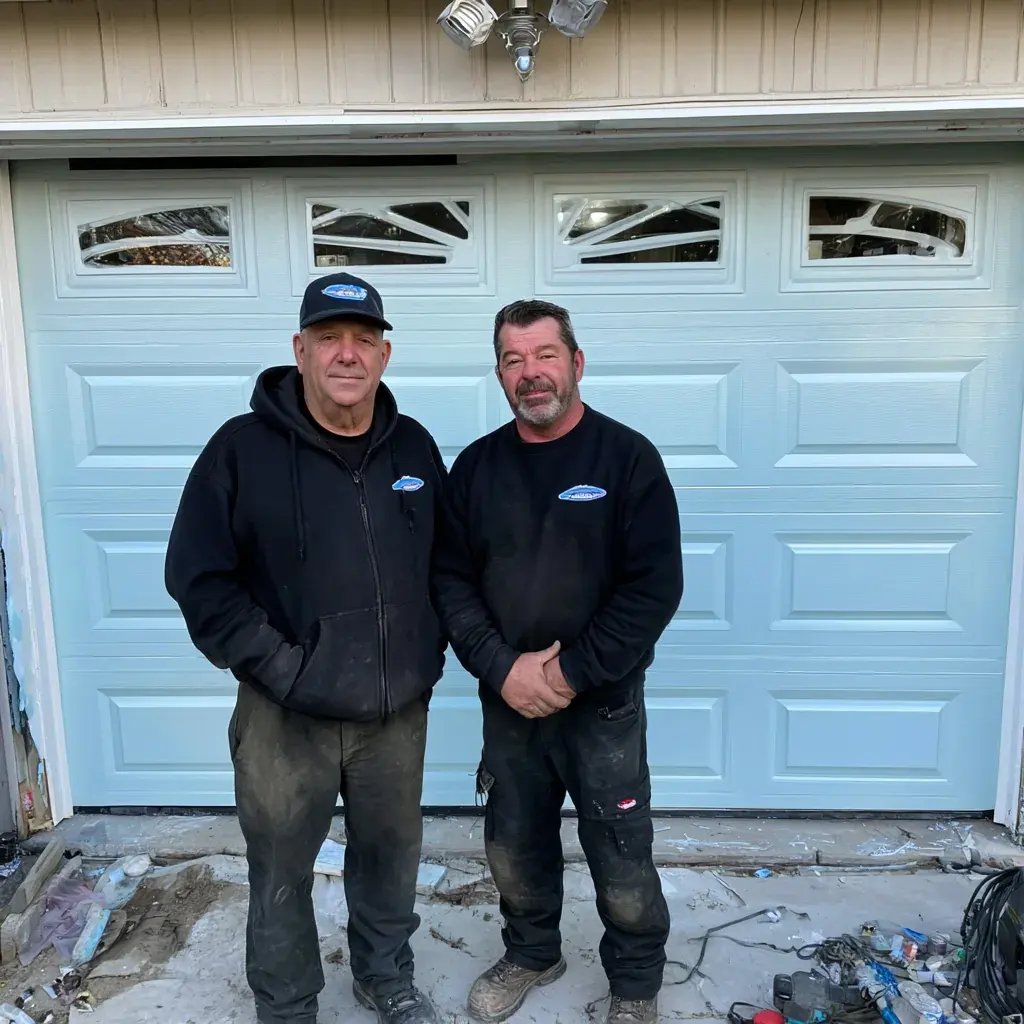
You press the button and the opener hums like it always does, the chain tugs forward, but the door itself never leaves the ground. That gap between motor sound and no movement is the tell. Torsion springs carry almost all the pull needed to lift a Franklin garage door, and once one lets go, the opener is left trying to do a job it was never built to handle alone. Before you touch anything else, this is worth understanding on its own.
What The Counterbalance Actually Does
The torsion spring above your garage door does the heavy lifting. Wound tight on a metal shaft, it stores the force that counters the door's full weight, so the opener only has to nudge things along rather than hoist a few hundred pounds by itself. When that spring lets go, the opener motor still runs and the chain still moves, but the door has lost its counterbalance and simply will not rise. Everything else on the system depends on that spring holding its wind.
Checking A Torsion Spring Safely
Stand back and shine a flashlight along the spring above the door. A working spring looks like one continuous coil, wound edge to edge with no daylight showing through. A broken one shows a clean gap, usually one to two inches, where the coil separates and the cut ends sit apart. Look only. Do not touch the winding cones, do not put a hand near the lift cables, and do not try to force the door up to confirm your suspicion.
What Not To Touch Or Test
Do not touch the winding cones at either end of a torsion spring, and do not handle the lift cables running down beside the track. Both stay under heavy tension even when a spring has broken, and a cone can let go without warning. Do not try to prove your theory by pulling on the door by hand either. If the counterbalance has failed, the door's full weight will drop suddenly, and there is nothing gentle about that for hands, feet, or the door itself.
Older Homes And Extension Springs
Grassland and the older stretch of Hillsboro Road near Temple Hills still have houses from the 1970s and 80s built with a stretched extension spring above each side of the door instead of the torsion bar most newer homes use. When one of these fails, the door usually won't go flat on its own — the good side stays taut while the broken one goes slack and lets that corner hang. Homes this age often lack the safety cable meant to hold the spring in place if it lets go, so leave that side alone entirely and call it in.
The Missing Containment Cable
Extension springs from this era were often installed without a containment cable running through the coil, a safety cable meant to keep a failed spring from becoming a projectile inside the garage. If your home falls into that older Grassland or Temple Hills range and you can see a bare extension spring with nothing threaded through its center, that absence is worth noting for whoever eventually services the door, even before it fails.
Why This Happens On Cold Mornings
Springs carry a lifespan measured in open-and-close cycles, not calendar years, so a spring near the end of its life is already weak before winter arrives. Cold makes steel less flexible and more likely to snap under load it had tolerated for years. Franklin mornings near freezing are common enough that this timing shows up often. The cold did not cause the wear underneath it. It just happened to be the moment the metal finally gave out after years of lifting the same door.
Unplug The Opener First
Once you suspect a broken spring, unplug the opener from the wall outlet or switch off its breaker. This is not about the motor being unsafe on its own. It is about habit: someone in the house presses the remote or the wall button without thinking, the opener tries to force a door it cannot lift, and that adds strain to cables, tracks, and the opener's drive mechanism that were never designed to fight a stuck door.
Two Springs, One Weak Point
Homes off Hillsboro Road and through parts of Grassland and Temple Hills built in the 1970s and 80s sometimes still run on extension springs instead of torsion springs. These sit above the horizontal tracks, one on each side, and they fail differently. One side goes slack while the other stays taut, so the door hangs crooked or refuses to move square. Older installs in this age bracket also frequently lack the containment cable that should run through the spring's center, a safety gap worth having checked.
Slab Homes Versus Crawl Space Homes
Newer subdivisions around Cool Springs and Berry Farms tend to sit on slab foundations, while older homes nearer downtown Franklin and along Del Rio Pike more often have crawl spaces or basements beneath the garage. That difference does not change how a spring fails, but it does change the door and track height a technician is working with, which is part of why an accurate description of your home's age and layout helps whoever eventually looks at it.
What Happens To The Opener Itself
With the springs gone, the opener has to lift the door's full weight by itself, which it was never built to handle alone. Pressing the button anyway asks the drive gears and motor to do work meant for the spring, and repeated attempts wear down parts that were fine the day before. Unplugging the unit keeps a habitual button press from turning a spring problem into an opener problem, which costs more to sort out.
Why It Snapped on a Cold Morning
Unplug the opener once you suspect a broken spring, so nobody in the house presses the remote or wall button out of habit while you sort things out. A motor straining against a dead counterbalance is how a spring problem turns into an opener problem. Leaving the unit powered down costs nothing and protects the drive gear and motor from load they were never built to carry alone.
Dealing with this in your home?
Franklin's clay soil swells after storms rolling through Cool Springs and settles again once things dry out near the Harpeth River, and a garage door track anchored to a slab or crawl space foundation shifts right along with it. Homeowners near McKay's Mill or off Del Rio Pike often notice the door binding on one side first, right when the ground moves.