A door off track in Franklin means a roller has jumped the metal rail, or the rail itself has torn loose from a flag bracket bolted to the frame. Homeowners near Downtown Franklin and out toward Cool Springs describe the same moment: a hard bang, then a panel hanging crooked instead of sitting flush. Sometimes only one side has slipped and the door still half-moves. Other times the whole run has bowed and nothing lines up with the opening anymore. Either way, the door has stopped tracking straight, and forcing it further usually turns a bent track into a torn one.
What Off Track Means
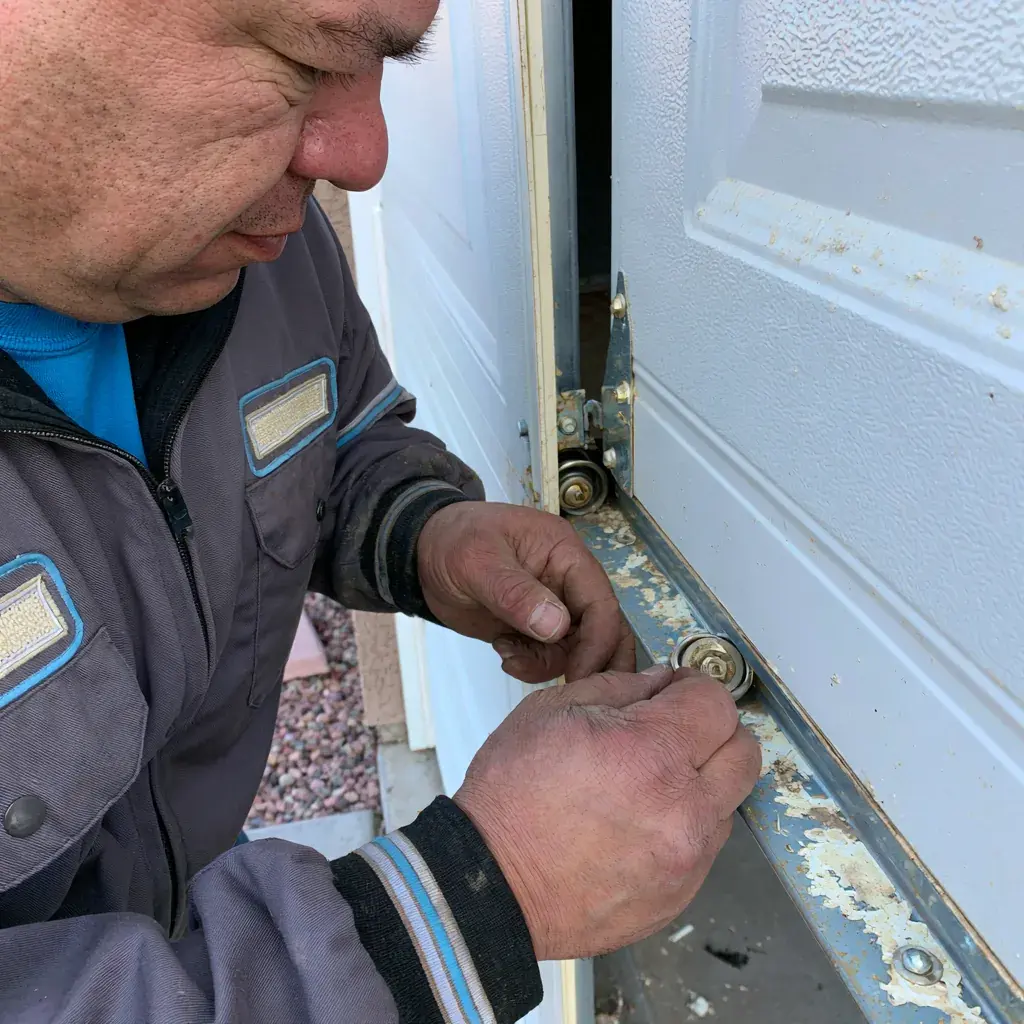
The track is the vertical rail that keeps a panel moving in one straight line on each side of the opening. When a roller works free of that channel, the section it is attached to no longer has a fixed path, so it can tilt, drop, or bind against the frame depending on where in the cycle it happened.
Stop Using The Opener
Once a roller is out of the track, the opener should not be used again until someone has looked at the door. The motor has no way of sensing that a section is riding loose, and it will keep pulling the cable or belt as if nothing changed, which is how a bent track turns into a torn panel or a cracked jamb.
Why That Matters Structurally
Both tracks share the weight of the panel equally when everything runs straight. The moment one roller jumps the rail, that balance breaks, and the springs above the door keep pulling on a system that is no longer level. Franklin garages built on sloped lots, including some closer to Del Rio Pike, feel this fast because the frame already carries a slight twist before anything derails.
How The Door Is Secured
A door off track is not sitting on its own weight anymore. Cables, hinges, or the opener arm are usually holding it wherever it stopped, and that grip is not something to test by hand. Leave it exactly where it is, prop nothing under it, and do not push the panel toward the frame to square it up. Franklin homeowners should treat the door as fixed in place until it is looked at.
Checking The Full Track Run
Once the door is steady, the entire track on both sides is worth checking, not just the spot where the roller came out. Homes in Franklin's older sections near Downtown Franklin and newer ones out toward Berry Farms both see the same pattern: one loose bracket further down the rail often set the derailment in motion.
Common Causes In Franklin
A trash can or a bike leaning against the bottom panel is a common cause reported around Franklin garages, especially in newer subdivisions off Mack Hatcher Parkway where two cars and yard gear share tight bays. Age plays a role too. Homes built before the city's growth years can have rollers or brackets that have simply worn loose over time, letting the door drift off line during an ordinary open or close.
Bent Track Or Slipped Roller
Sometimes the metal rail itself has bent, usually from a sharp impact, and a roller cannot sit back in a channel that no longer runs straight. Other times the track is fine and the roller only slipped out at a low point, which can look identical from across the garage. Telling these apart matters, because forcing a door back onto a bent rail just repeats whatever caused the damage the first time.
Loose Bracket, Not The Rail
Not every derailment is the track's fault. The flag bracket, which is the angled piece bolting the track to the frame, can work loose from repeated vibration and let the whole rail shift a few degrees. From a few feet back this looks like a bent track, but the fix is tightening or resetting hardware, not straightening metal. A close look at the bracket bolts usually settles which problem is actually present.
What Not To Do Alone
Do not touch the opener, and do not try to push or lever the door back onto the track. A garage door in Franklin runs on a spring system that holds tension whether the door is aligned or not, and a derailed roller often means a cable already gave way somewhere along the track. Forcing the panel can snap what is left holding it, and a door that size coming down unsupported can hurt someone. Leave it exactly where it stopped, unplug the opener at the wall if you can reach it safely, and keep the car and family clear of the bay until a pro looks at it.
Signs Worth Noting Before Repair
A few clues help before help arrives: which side dropped, whether the door was mid-cycle going up or down, and whether the opener kept pulling after it happened. Homes around Westhaven and Berry Farms see this after a spring gives out; older places near Old Town more often show a worn roller or bent track flange. None of that changes what happens next, but it saves the tech a diagnostic trip once they're on Franklin Road heading your way.
Checking The Track Before Repair
Checking the track starts with looking, not touching. From a safe distance, see whether the rail runs in one continuous line from the top curve down to the floor plate, or whether there's a visible kink or gap where the bend happened. A flashlight along the rail's edge often shows a bend that is easy to miss under garage lighting. This look is what tells a technician whether the fix is a rail swap or a bracket reset.
Dealing with this in your home?
Franklin's clay soil swells after storms rolling through Cool Springs and settles again once things dry out near the Harpeth River, and a garage door track anchored to a slab or crawl space foundation shifts right along with it. Homeowners near McKay's Mill or off Del Rio Pike often notice the door binding on one side first, right when the ground moves.