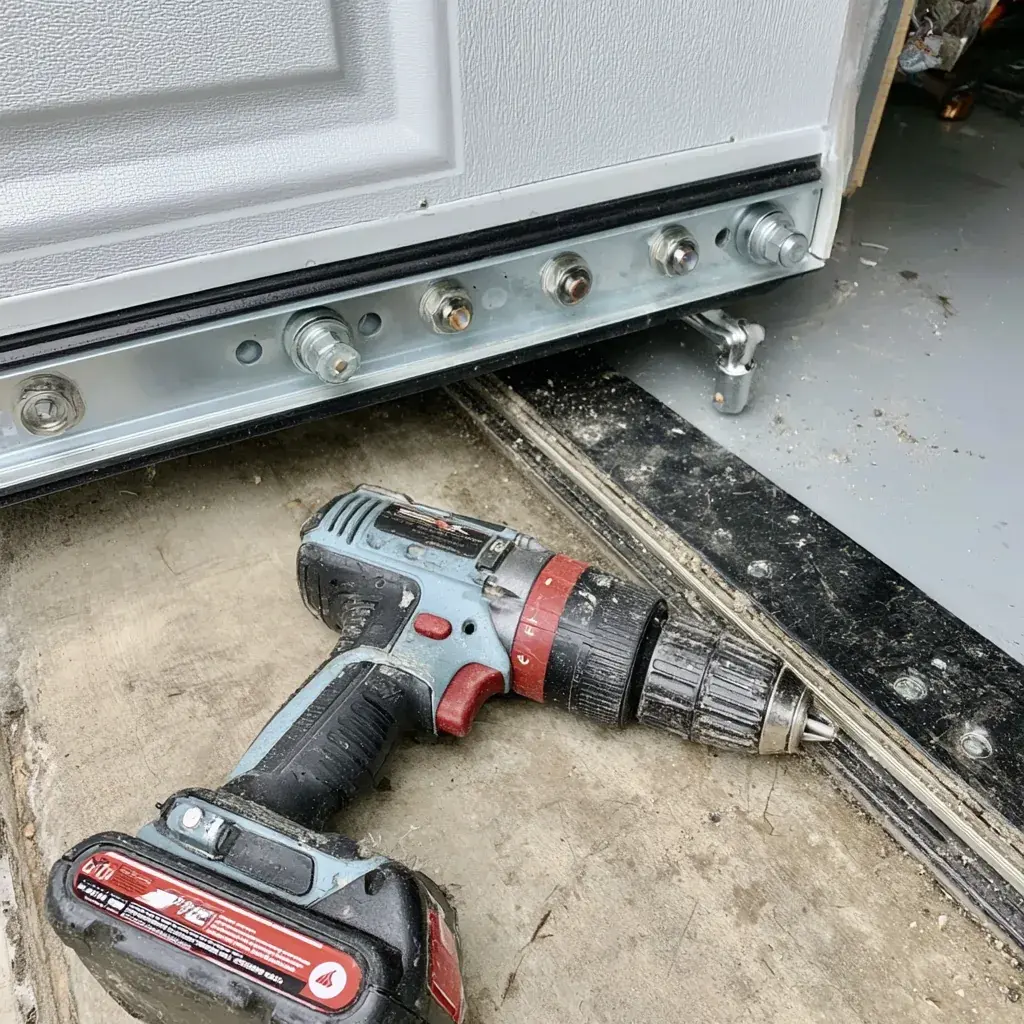
Storm Season Puts Real Weight on Panels
Raynor doors reach homeowners through local dealers, not big-box aisles, so most people meet the name already hanging on a house near Berry Farms or Westhaven that someone else furnished. Tracking down the original dealer, or any dealer carrying the line, is usually the fastest path to a matching part.
Franklin homeowners usually meet Raynor already mounted on a door bought through a local dealer, not a shelf at a home center. Its steel sectional lines, including ShowCase, cover several insulation and panel-style tiers for both new-build subdivisions and older Franklin streets.
Openers rarely fail outright. More often a sensor lens has fogged, or a bracket has loosened enough that the safety eye reads a false obstruction. The door stops inches from the floor and reverses, and the fix is usually a cleaning and a bracket tightened, not a new motor.
When Foundation Shift Throws Doors Out of Square
- Dealer Network
- Raynor doors move through a dealer channel rather than a big box shelf. For a homeowner in McKay's Mill or Fieldstone Farms, that means replacement parts and warranty questions route back through a dealer, not a retail counter.
- Panel Style
- Insulation varies by series across Raynor's residential lineup. A bedroom sitting above the garage in a Sullivan Farms or Ladd Park home benefits from checking which core the installed door actually carries before assuming it matches a newer, better-insulated model.
- Steel Gauge
- Raynor's torsion springs follow the same balance and cycle-life standards used across the door industry. That standardization is what lets a licensed pro source a matching spring quickly rather than waiting on a brand-specific part.
- Opener Match
- Raynor builds its own opener line alongside the doors, but any Franklin garage can swap in a separate opener brand later without issue.
- Parts Sourcing
- Remote and keypad pairing on Raynor openers generally follows standard rolling-code protocols used industry-wide. A universal remote usually works, though an older opener near Old Town Franklin may be worth checking first.
- Availability
- Franklin's swing between humid summer heat and occasional winter cold snaps affects a Raynor door the same way it affects any steel sectional. Dust and pollen settle into track rollers during dry stretches, and cooler nights can stiffen weatherstripping enough to make the door bind slightly on its first run.
- Service Radius
- an estimated $1200–$4800
Getting Parts and a Pro on the Same Day
Homeowners in Legends Ridge or Laurelbrooke sometimes assume every dealer-sold door shares the same parts bin, since none of these brands carry a big-box name. Raynor hardware and track hangers are cut to its own specs, so a neighbor's leftover part from a different brand rarely bolts on cleanly. Homeowners in a Laurelbrooke or Legends Ridge subdivision sometimes assume every dealer-sold door shares parts, since none of them carry a familiar big-box name. Raynor panels and hardware are specific to their series, so matching model numbers with a dealer avoids ordering the wrong replacement.
What Storm Season Leaves Behind
Matching a damaged Raynor panel starts with the model stamp on the door's end stile, not its general look. A dealer can use that number to pull the right panel for a home near Mack Hatcher Parkway or out toward Grassland, since Raynor's construction has changed across production runs.
Raynor moves its doors through independent dealers rather than a single national counter, so parts availability depends on which dealer in Middle Tennessee still stocks that model line. Older ShowCase runs can take longer to source than current production.
A garage door in Franklin earns its keep through humid summers and cold snaps alike, and every temperature swing works on the same springs, cables, and hinges. Homes built decades apart carry different frames and different wear, so a fix that suits one house can miss the mark on another entirely.
VIEW-FOCUSED DOORS VERSUS DOORS BUILT FOR INSULATION
| What Gets Done |
What's Going On |
|---|
| Garage door tracks are only as straight as the frame around them. When a foundation shifts, even slightly, the door notices before you do. It starts binding on one side, chattering as it travels, or refusing to seat flush at the floor, which is where a technician usually starts looking. | A garage door carries real weight on a small set of moving parts, so wear rarely stays hidden long. Hinges loosen, cables fray, sensors drift out of alignment. None of it announces itself loudly, but each one changes how the door behaves days before it actually stops working. |
| Hail and high wind in a spring storm can dent a panel or knock an opener sensor out of alignment without anyone noticing right away. The door keeps closing, mostly, until the day it catches on something bent that used to be flat. | A garage door that opens and closes fine in October can start sticking or grinding once the first real cold snap hits. Metal parts contract, lubricant thickens, and a spring that was already worn finally gives out. The fix is usually simple, but it rarely announces itself before the day it happens. |
| Panels near the bottom take the brunt of standing water when heavy rain backs up faster than a driveway can drain. Waterlogged wood swells, steel rusts from the inside, and weatherstripping stops sealing long before anyone notices a leak. Catching it early keeps a soaked panel from spreading to the track. | A cold snap after a warm stretch can stiffen the grease in an opener and crack a seal that flexed fine all summer. That kind of change is often when a spring already carrying wear finally gives out, not on an ordinary mild day. |
Seasonal StressNew Raynor openers sold today are built to meet the federal safety requirements covering auto-reversing and entrapment sensors. Raynor's sectional doors are built to the same industry construction standards most steel dealer-channel doors follow. Swapping an older opener for a new one means the new unit's safety features apply.
Reading Rust And Rot Before They Spread
A Raynor panel creased by a car bumper or a wind-blown branch near Pinkerton Park rarely means the whole door needs replacing. Dealer-ordered panels can usually be swapped in on their own, matched to the existing color and insulation grade, without touching the sections that weren't damaged.
What Your Repair Video Doesn't Show
Reading the stamped model number or snugging a loose, visible bolt is fine for most homeowners to try. Springs and the cables under tension hold stored force that can injure someone without the right bars and clamps, so leave that part to a pro.
When Storm Season Leaves Panels Dented
An unbalanced door forces the opener motor to work harder than it should on every cycle, and that extra load wears on the drive gear and track brackets over months. Left unaddressed through a Franklin summer, that strain tends to end in a motor failure instead of a simple adjustment.
Not sure it's worth fixing? Ask first.
Treating raynor usually runs an estimated $1200 to $4800. That is a budgeting figure, not a price. These figures cover the working parts and the labor to fit them: springs, cables, rollers, hinges, bottom seal, opener components, panel repair. Anything structural is looked at separately before a number means much, whether that is a jamb gone soft where it meets the slab or a settled header on one of the older houses near the downtown square. Ask what the visit charge is, and get the scope in writing. Full bands and what moves them are on the pricing guide, and the service that handles this is General Garage Door Repair.