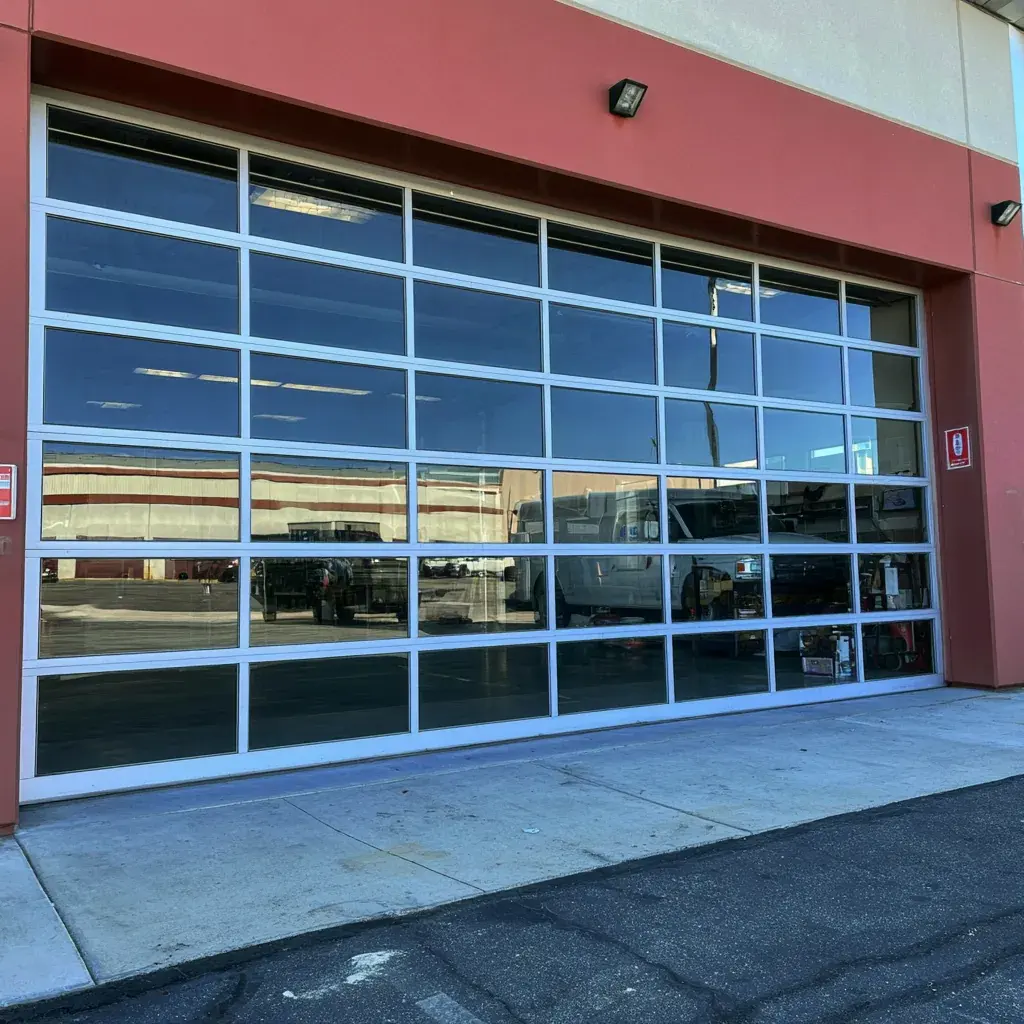
Every Seal Around Your Garage Door in Franklin, TN
Bottom seal, astragal, stop, and threshold seal, explained before you buy a replacement.
A garage door has four seals: bottom seal, perimeter stop, threshold seal, and astragal between sections. Each closes a different gap. In Franklin, humidity and clay-soil movement near Carters Creek wear vinyl faster than sun does.
Bottom Seal and Its Retainer
A garage door in Franklin depends on more than the strip along the bottom. That bottom seal sits inside a retainer track and takes the brunt of standing water on driveways near Carters Creek or the Harpeth River after a hard rain. The retainer holds the vinyl or rubber bead in shape; once the channel cracks or spreads, the seal twists loose and stops sealing at all. Homeowners near downtown Franklin often notice this first as a draft along the slab, not as a visible tear in the rubber itself.
The bottom seal is not one piece but two: a vinyl or rubber strip held inside a metal or plastic retainer that runs the length of the door's bottom edge. That channel is what lets the strip flex over uneven driveway seams without tearing loose. In Franklin's older sections and in newer subdivisions off Mack Hatcher Parkway alike, the retainer itself can bend or corrode faster than the seal does, and once it warps the strip stops sitting flat no matter how new it is.
Where two door panels meet, a section seal fills the horizontal joint so wind-driven water can't work through the hinge line during a hard rain off Carters Creek or Spencer Creek. On a double-car door built as two separate leaves, the astragal covers the seam down the middle, closing a gap none of the other seals reach. Homes near Fieldstone Farms or McKay's Mill with wider bays depend on that center seal holding tight in a stiff spring wind.
Stop Molding Around the Frame
Vinyl bottom seal in Franklin ages fastest from repeated wetting, not from a single flood. Williamson County's roughly 50 inches of rain a year keeps the bulb damp through much of the year, and vinyl that stays wet cycles between swelling and drying until it splits at the corners or pulls loose from the retainer years before a dry-climate seal would fail.
Stop molding fails differently than the bulb it holds. The wood or vinyl strip itself can warp from humidity, pulling away from the frame and leaving gaps a bottom seal never touches. In Franklin's humid summers, homes near Fieldstone Farms and Berry Farms see this most on the sun-facing side, where the molding cups outward over a season or two and needs resetting or replacing before the seal against it can do its job.
Threshold seals and astragals in Franklin take more damage from grit and freeze-thaw cycling than from sun. Water that sits on the slab after a pop-up thunderstorm can freeze on a cold night near 30 degrees Fahrenheit, and the repeated expansion works a threshold bead loose at the edges faster than steady summer heat ever would.
Threshold Seal Along the Slab
Franklin's newer slab-on-grade subdivisions, from Berry Farms to Fieldstone Farms, pour the driveway flush with the garage floor, so the threshold seal is what keeps the slab edge dry. It is a strip fixed to the concrete rather than the door, and it fails by tearing where tires cross it or by flattening under years of weight until water finds the gap. On a graded lot near a low spot, a worn threshold seal is often the reason a garage floor stays damp after a pop-up thunderstorm.
Storms around Franklin often arrive sideways rather than straight down. A pop-up thunderstorm crossing Cool Springs or rolling toward Berry Farms can push rain at an angle strong enough to test stop molding that's gone brittle, forcing water past the frame instead of around it. The bottom seal takes a different kind of punishment: standing water from a slab that slopes the wrong way, common in newer subdivisions off Mack Hatcher Parkway, holds moisture against the gasket long after the rain stops and shortens its life.
Astragal Between Double Doors
The astragal is the seal between two door sections or between double doors, sometimes a bulb-shaped strip fixed to the meeting edge, sometimes a run of stop molding with a strip set into it along the frame. Its job is narrower than the bottom seal's: it closes the vertical or center gap a bottom seal can't reach. On garages that catch a pop-up thunderstorm at an angle, a torn astragal is often the reason water shows up along the floor even when the bottom seal looks fine.
Franklin's 2010 flood along the Harpeth River is the clearest reminder of what a failed astragal or bottom seal allows in low-lying stretches near the river and its tributaries. Driven rain from a pop-up summer thunderstorm finds the same gap a slow flood would, just in smaller amounts. A cracked astragal on a double door in Berry Farms or Sullivan Farms won't flood a garage on its own, but it lets wind-driven water past a seam built to stop it.
Seal Terms Worth Knowing
- Bottom seal: the strip in the retainer along the door's bottom edge. Astragal: the seal closing the gap between double doors or panel sections. Threshold seal: fixed to the slab, not the door. Perimeter seal and stop molding: the seal running the frame's sides and top, cutting draft and driven rain at the jamb.
- Threshold seal: a low strip fixed to the slab, not the door, that rises to meet the bottom seal and stops driven rain a sloped driveway would otherwise carry inside.
- Stop molding: the trim strip around the frame, often near driveways off Franklin Road, that the closed door presses against to block draft along both jambs and the head.
- Threshold seal: a strip glued or screwed to the slab itself, useful on garages near the Harpeth River or Carters Creek where driven rain can push under a bottom seal alone.
- Perimeter seal: covers the stop molding on both sides plus the head, closing the gap the bottom seal cannot reach and keeping wind-driven rain out during a pop-up thunderstorm.
- Retainer: the vinyl or aluminum channel along the bottom edge that grips the seal's bead, letting a worn seal slide out without removing hardware from the door itself.
Frequently Asked Questions
How do I know my bottom seal has failed?
Look at the bulb along the door's bottom edge. If it's flattened, cracked, or has pulled out of its retainer in spots, it's done. Run a flashlight along the frame too, since a worn perimeter seal often fails around the same time and shows daylight at the sides even when the bottom looks fine.
Why does cold air come in under my garage door?
Usually the bottom seal, not the door itself. Once the vinyl bulb flattens or splits, it stops closing the gap against the slab, and outside air moves straight through underneath. A stiff, cracked seal is a common cause after a Franklin cold snap, when low temperatures near 30°F make older vinyl brittle enough to crack at the retainer.
What's the seal between double garage doors called?
No. The bottom seal sits in a retainer on the door's bottom edge and moves with it on every open and close cycle. The astragal is fixed along the frame or between panels and only deals with the gap a moving bottom edge can't cover. A shop near Cool Springs might replace one without touching the other, since wear on each comes from a different kind of stress.
Time For a New Seal?
A stiff bottom seal or a cracked astragal only gets worse with each cold snap. Ask the licensed pros for a fitted replacement.
Call (615) 759-0548