Commercial Sectional & Overhead Doors
Franklin Commercial Doors
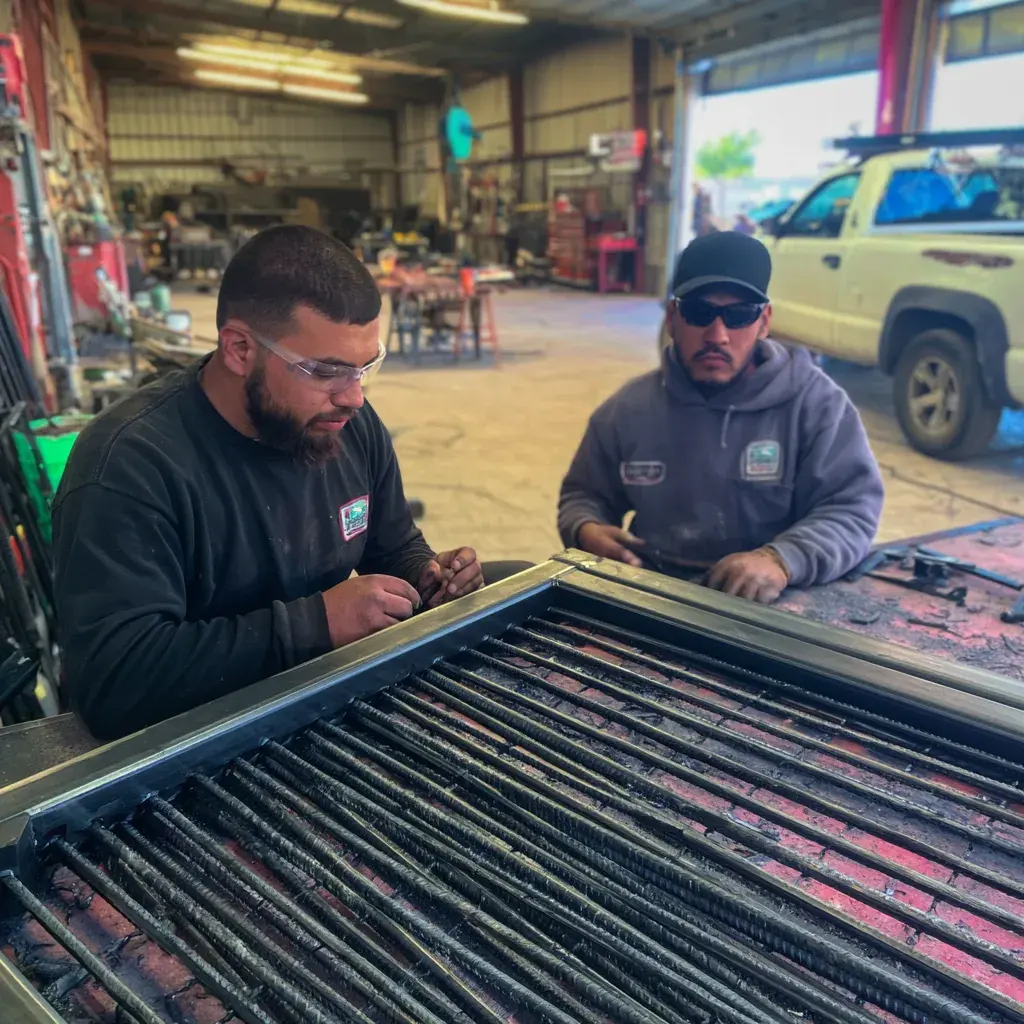
Specifying a bay door to the opening, the duty cycle, and the schedule, not to whatever's in stock.
A commercial garage door in Franklin is built to the opening, not pulled off a shelf. Measured width, height, headroom, and side room come first, then insulation, wind load, and an operator sized to daily cycle count.
A commercial bay door in Franklin gets ordered to the opening, not picked off a shelf. Before anyone quotes a price, the licensed pros we connect you with measure the actual opening width and height, check headroom above the header, and confirm side room for the track. Warehouse units off Mack Hatcher Parkway and light industrial buildings near Liberty Pike rarely have identical openings, even within the same business park, so a template quote is a guess until someone puts a tape on the wall.
Bay doors are made to the opening, not trimmed to fit it. Measure width and height at the narrowest points, then check headroom above the opening and side room on both jambs, since track and spring hardware need real clearance. Note the ceiling height too, for high-lift or vertical-lift setups. A facilities manager off Liberty Pike or Mack Hatcher Parkway should have these numbers before calling anyone, because a wrong measurement means a reorder, not an adjustment.
Wind load and insulation get specified too, especially for exposed bays and unheated space. A retail service bay around Cool Springs has different insulation needs than a warehouse dock, and the door has to be rated for the opening's exposure, not just sized to fit it. Getting these numbers right before ordering is what keeps a Franklin installation from becoming a return trip.
A commercial spec sheet covers more than size. It should list wind load rating if the building code calls for it, insulation value if the space is heated or cooled, and cycle count, meaning how many times the door opens and closes in a day. A dock door near Carothers Parkway running fifty cycles a day needs a different operator than a service bay that opens a dozen times. The sheet should also note whether the existing jambs and header can carry the new door's weight, since older framing sometimes can't.
If the jambs or header fall short, that gets addressed before the door shows up, not discovered while it is being hung. This is where a Franklin installation either stays on schedule or stalls, and it is worth the extra hour of inspection up front to avoid the second one.
| Item | Why It's Checked | What Happens If Skipped |
|---|---|---|
| Warehouse bay | High daily cycle count | Heavy-duty operator, reinforced panel |
| Dock door | Frequent open-hold-close use | Insulated panel, wind-load rated |
| Retail service bay | Moderate daily cycles | Standard-duty operator, visual grade panel |
| Light industrial unit | Mixed cycle demand | Mid-duty operator, insulated option |
| Opening width and height | Measured, not assumed | Sets the ordered door size |
| Headroom and side room | Confirms wind load and code fit for the bay | Door rated wrong for the building's exposure |
| Insulation value | Matters for conditioned warehouse space | Higher energy loss through the bay |
| Finish and paint match | Matches signage or building standard | Mismatched panels on the front elevation |
A commercial door is made to the opening, not stocked in a warehouse waiting for a call. Once the measurements, duty cycle, and framing are confirmed, the manufacturer builds the door to that specification, and that takes real time. Anyone promising a bay door installed in Franklin by the end of the week, sight unseen, is either quoting from a narrow in-stock range or setting up a delay later.
Lead time is worth stating plainly rather than glossing over, because a facilities manager scheduling around a retail bay in Cool Springs or a dock at a warehouse off Mack Hatcher Parkway needs a real date, not an optimistic one. The order gets placed once specifications are locked, and the installation gets scheduled once the door is confirmed built and ready to ship.
Insulation matters for warehouse space off Liberty Pike or Mack Hatcher Parkway where the bay opens onto conditioned work areas, not just unheated storage. Wind load matters for exposed elevations near Carothers Parkway. Both get specified before ordering, not adjusted after the door shows up, because a commercial section is built to those numbers rather than trimmed to fit them on site.
A commercial door is built after it's ordered, not pulled from a shelf, so lead time runs weeks rather than days once the opening is confirmed. Insulated panels, wind-rated sections, and higher-cycle operators all add time on top of that. The honest move is to order early and schedule the swap around it, not to promise a date before the manufacturer gives one. A business planning around this avoids the scramble of an opening with no door and no fallback.
For a site with multiple bays, phasing usually means working one door at a time so the rest of the building keeps operating. For a single-bay retail service location, it often means scheduling the work around business hours so the bay is not left exposed when the building is unattended. Either way, the plan gets set before the first panel comes down, not improvised once the old door is already out.
Tennessee's contractor license requirement applies once a single project, labor and materials combined, reaches $25,000. A commercial bay door installation can land above or below that line depending on the size and features of the door and operator, so it is worth asking where a given quote falls relative to that threshold.
Williamson County has not adopted the Home Improvement Contractor requirement that some other Tennessee counties apply to smaller residential jobs, and a commercial installation is a different category of work regardless. What actually governs a Franklin bay door project is the state's $25,000 contractor license threshold, and nothing more specific than that should be assumed on top of it.
Documentation matters after the door goes in, not just during the sale. A facilities manager overseeing a unit off Liberty Pike or a dock near Carothers Parkway usually needs the operator's cycle rating, the door's wind load rating, and installation dates on file for insurance or maintenance records, not just a receipt.
A retail service bay around Cool Springs cannot sit open overnight without a plan, so phasing means the old door stays operational until the new one is ready to hang, with the swap itself scheduled for the shortest possible window. The licensed pros we connect you with coordinate delivery timing against that install window instead of leaving a bay exposed.
Around Franklin, this comes up most at warehouse and light industrial buildings off Mack Hatcher Parkway and Liberty Pike, where dock doors near Carothers Parkway see steady daily cycles, and at retail service bays around Cool Springs, where a door failure blocks a bay a customer is waiting on. Each setting calls for a different duty cycle and a different install window, which is why the opening and the schedule get worked out together, not separately.
Garage door frames get their alignment from the framing around them, and framing moves when the ground underneath does. As foundations settle over years, tracks that once ran plumb start pulling slightly out of square, and openers start straining to close a door that no longer sits the way it did the day it was installed.Grassland, Fieldstone Farms and McKay's Mill. Newer subdivisions built on slab foundations move less than older crawl-space homes, but a slab poured slightly off level still tips a track a few degrees. That small lean is enough for a roller to ride the edge of the rail instead of the center, wearing one side faster than the other.
A garage door that worked fine all year can start binding once nights turn cold, then loosen up again by afternoon. That swing in temperature is normal here, but it stresses springs and cables more than most homeowners expect. Get it checked before a cold snap turns a stiff door into a stuck one.Homes near Berry Farms and McKay's Mill sometimes have a second door for a workshop or oversized garage, built wider than the standard single-car size. Wider panels and heavier-duty tracks cost more to source and align, which shows up as a separate line, not a surprise. Full guide bands are on the pricing guide, and the commercial overview covers how a scheduled program works.
Franklin Commercial Doors
Commercial Operators
Dock doors, Franklin
Plan for a few weeks between order and install, since a bay door this size is built for your opening rather than pulled from a shelf. Once it arrives, a crew can usually swap an existing door in a single day, so a Cool Springs retail bay is not left open overnight waiting on parts.
Yes, this is usually phased. The old door often stays in place until the new one and its frame work are ready, and some jobs close the opening with a temporary barrier between visits. The goal is to avoid leaving a warehouse or dock bay near Carothers Parkway open and unsecured after hours.
Tennessee requires a state contractor license only once a single project's total cost reaches the higher threshold set by state law, regardless of trade. Williamson County has not adopted the separate Home Improvement Contractor rule some counties use for smaller jobs, so that requirement doesn't apply here in Franklin.
The operator gets sized to expected daily cycle count, not to the lowest price point. A dock door near Carothers Parkway cycling many times a day needs a different duty rating than a retail service bay around Cool Springs opening a handful of times daily, and that spec gets set before ordering, not after.
Get the opening measured and the cycle count reviewed before anything is ordered for a Franklin bay or dock door.
Call (615) 759-0548