Commercial Roll-Up Doors
Franklin Roll-Up Doors
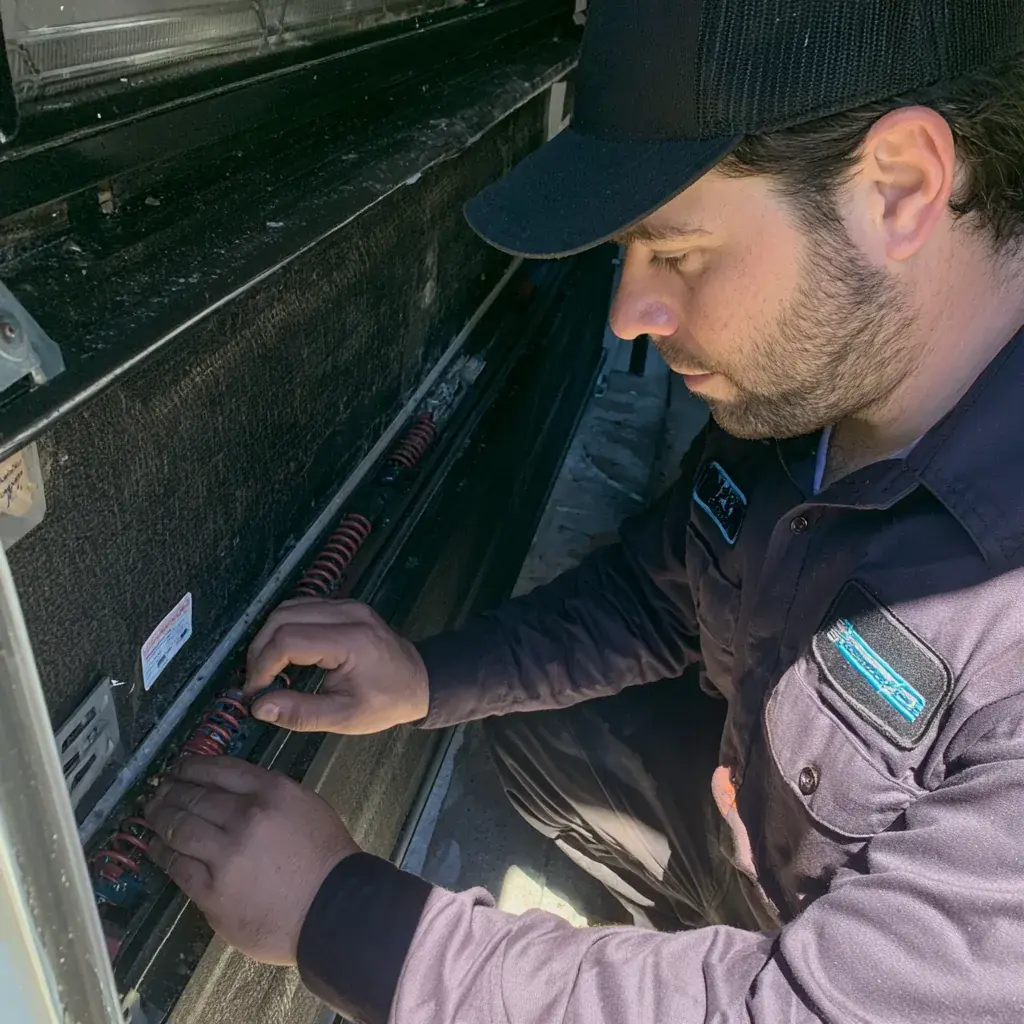
Repairs specified to cycle count and opening width, not the badge on the door.
Commercial garage door repair is priced by duty cycle, not door type. A bay door cycling dozens of times a shift in Franklin needs heavier springs, bearings, and rollers than a door that opens twice a day, so specification comes before repair.
A door on a Franklin loading dock that opens forty times a shift wears differently than one that opens twice a day. The pros we connect you with spec hardware to that number, not to the brand name stamped on the track. Opening width, weight, and daily cycle count decide the spring wire gauge, the bearing grade, and how often rollers need replacing. A retail bay near Cool Springs and a warehouse door off Mack Hatcher Parkway can carry the same nominal size and still need entirely different parts underneath.
Downtime is the actual cost, and it rarely lines up with the price of the part. A stuck bay door at a distribution point near Liberty Pike can idle a loading crew for an hour while a forty-dollar roller gets replaced. That math is why the visit gets planned around your schedule, not the other way around. The pros will ask about your busiest hours before they ask what's wrong with the door, because the fix that waits until after close is worth more to you than the fix that happens fastest.
This page covers the repair visit itself: what gets diagnosed and settled on the spot, what gets measured and ordered for a second trip, and how the paperwork works when the person paying isn't standing there watching. If you manage a single retail bay off Carothers Parkway or a stretch of warehouse doors near Franklin's light industrial areas, the questions are the same. Cycle count, documentation, and how fast the door comes back online.
Some failures get settled the same visit. A snapped cable, a worn roller, a bearing that has started to grind, or a burnt-out opener part are usually carried as stock and fitted on the spot, because the door needs to move again before the next truck backs up or the next customer tries the entrance. Franklin businesses lose more to a stuck bay than most repairs cost, so the visit is built around getting the door cycling safely first.
Other work has to be measured before it can be ordered. A bent section, a custom-length spring bar sized to an odd opening, or a heavier operator assembly for a high-cycle door gets specified on site, then fitted on a booked slot once the part is in. That gap is disclosed up front, with a temporary way to secure the door in between, so a Franklin business isn't guessing how long a bay stays out of service.
| Repair | Same Visit | Booked Slot |
|---|---|---|
| Counterbalance spring | Same visit, stock sizes | Booked, custom-length bar |
| Lift cable | Same visit | Booked if drum damaged |
| Bearings and rollers | Same visit, stock sizes | Booked for heavy-duty sets |
| Operator parts | Same visit, common boards | Booked for full assembly swap |
| Sections and panels | Rarely stocked on van | Booked, measured to opening |
| Operator parts | Usually, if bearing is in stock | If custom bearing must be ordered |
| Retail bay, few daily cycles | Yes, common sizes carried | Only for oversized commercial track |
| Operator gearbox rebuild | Rare, depends on parts on hand | Typical, ordered to the model |
Duty cycle drives the specification more than the door's category ever does. A bay opening thirty times a shift near Mack Hatcher Parkway wears springs, rollers and bearings on a schedule a retail entrance off Carothers Parkway never sees. The pros we connect you with size counterbalance and cable to that cycle count and opening width first, then match hardware weight to how the building actually uses the door, not to a generic commercial label.
Other repairs need a second trip. A section damaged badly enough to need replacing, a custom-length spring bar for a wider-than-standard opening, or a heavy-duty operator assembly for a high-cycle bay all have to be measured on site and ordered to match. That's not padding the job. A spring bar cut wrong for the opening width is a safety problem, not just an inconvenience, so it gets ordered right the first time rather than guessed at.
Opening width matters here as much as cycle count. A standard bay door and a wide loading opening off Carothers Parkway don't take the same spring bar, and stocking every length on a van isn't realistic. Once the opening is measured and the part is on order, the second visit is usually booked fast, because a facilities manager in Franklin needs a firm date more than a fast promise.
Franklin's commercial doors split roughly by corridor. Light industrial and warehouse buildings along Mack Hatcher Parkway and Liberty Pike run wider bay doors built for daily truck traffic and higher cycle counts. Retail strips and office parks around Cool Springs and Carothers Parkway tend toward narrower service and drive-through doors that open less often but still need to work every time a shift starts. The spec, and the visit, follow which kind of building it is.
Booking ahead matters more for commercial work than for a house call. Same-day service still applies to a stuck bay door that's stopping trucks right now, but scheduled maintenance and non-urgent repairs get planned around your operation's calendar, not squeezed in whenever a slot opens. If you manage several properties around Franklin, coordinating repair timing across sites is worth mentioning up front, so nothing lands during a peak week by accident.
Commercial accounts usually need more than a receipt. The pros we connect you with can invoice against a purchase order, itemize parts and labor separately, and note the make and model of the operator or spring assembly on file. That paperwork matters when a Franklin facilities manager has to justify the spend or track a door across its service life, so it's built into the visit rather than pieced together afterward on request.
Documentation matters too, separate from the invoice. A record of what failed, what was replaced, and when, gives a facilities manager something to point to when a door needs replacing instead of repairing again, or when a warranty question comes up later. Ask for that paper trail on every visit, not just the ones that feel urgent, because a door that's been patched three times in a year near a Franklin retail strip tells a different story than one that's been patched once.
A closed bay door on a business day is a different problem than a slow door at home. It stops trucks, holds up deliveries, and can shut down a whole loading operation near Franklin's warehouse stock off Mack Hatcher Parkway or Liberty Pike. That's the reason duty cycle, documentation, and scheduling get more attention here than they would on a house call, and it's worth asking about all three before a small problem turns into a closed bay during your busiest hour.
A lost trading hour costs more than any part on the invoice, so scheduling works around your hours, not the other way around. Franklin businesses near Cool Springs and Liberty Pike get repairs billed to the business, with paperwork that matches a purchase order rather than a handwritten receipt, so the record holds up for whoever reviews it later.
A bay door on the light industrial stock off Mack Hatcher Parkway might cycle forty or fifty times a shift. A retail unit near the Cool Springs Galleria might see a dozen. That gap is why the same-badge door on two different Franklin properties can wear at completely different rates, and why the fix has to match the cycle count, not the model number.
A door that worked fine all summer can start sticking the first cold night of the year. Rubber seals stiffen, tracks tighten by a fraction, and springs under tension react to the drop faster than most people expect. It's rarely one part failing outright, just cold exposing wear that was already there.Grassland, Fieldstone Farms and McKay's Mill. Franklin sits on a mix of shallow limestone and clay soil, and homes react differently depending on age and foundation. Crawl-space houses near historic downtown Franklin shift on a different schedule than slab homes in newer subdivisions, so track misalignment shows up at different ages for different neighbors.
Slab, crawl space, or basement — the foundation underneath decides how a garage door ages. Shifting soil twists the frame out of square, and once the frame moves, rollers bind and springs carry weight they weren't set for. A quick square-up now beats a cracked panel later.Homes near Berry Farms and McKay's Mill sometimes have a second door for a workshop or oversized garage, built wider than the standard single-car size. Wider panels and heavier-duty tracks cost more to source and align, which shows up as a separate line, not a surprise. Full guide bands are on the pricing guide, and the commercial overview covers how a scheduled program works.
Franklin Roll-Up Doors
Franklin Commercial Doors
Commercial Operators
Most counterbalance, cable, bearing, roller and standard operator parts ride on the van and get fitted the same visit, whether the property sits off Carothers Parkway or near downtown Franklin. Anything needing a measured section, a custom-length spring bar, or a heavy operator assembly gets ordered and booked for a return slot instead.
Often, yes. Many repairs, like a cable, roller, or bearing swap, get handled on one side of a two-bay building while the other stays open, or scheduled around a slower stretch in the trading day. If a section has to be measured and ordered, the pros we connect you with will secure the opening so the building stays usable while the part is on order.
Yes, invoicing against a purchase order is routine for Franklin businesses, from retail units around Carothers Parkway to light industrial space off Mack Hatcher Parkway. Ask when you book so the paperwork matches how your office already handles vendor billing.
A high-cycle bay door working dozens of times a shift near the warehouse stock off Liberty Pike wears differently than a low-cycle office door near Cool Springs. Specification follows opening width and daily cycle count, not the door's brand, so two similar-looking doors can need very different hardware.
Tell us the opening width and daily cycle count, and the licensed pros we connect you with will book a slot around your trading hours.
Call (615) 759-0548